Forehead Ornament (100 BCE–700 CE): Art, History and Details
Forehead Ornament at the Cleveland Museum of Art: 100 BCE–700 CE, hammered gold alloy. Explore the work's context, creator attribution and collection history.
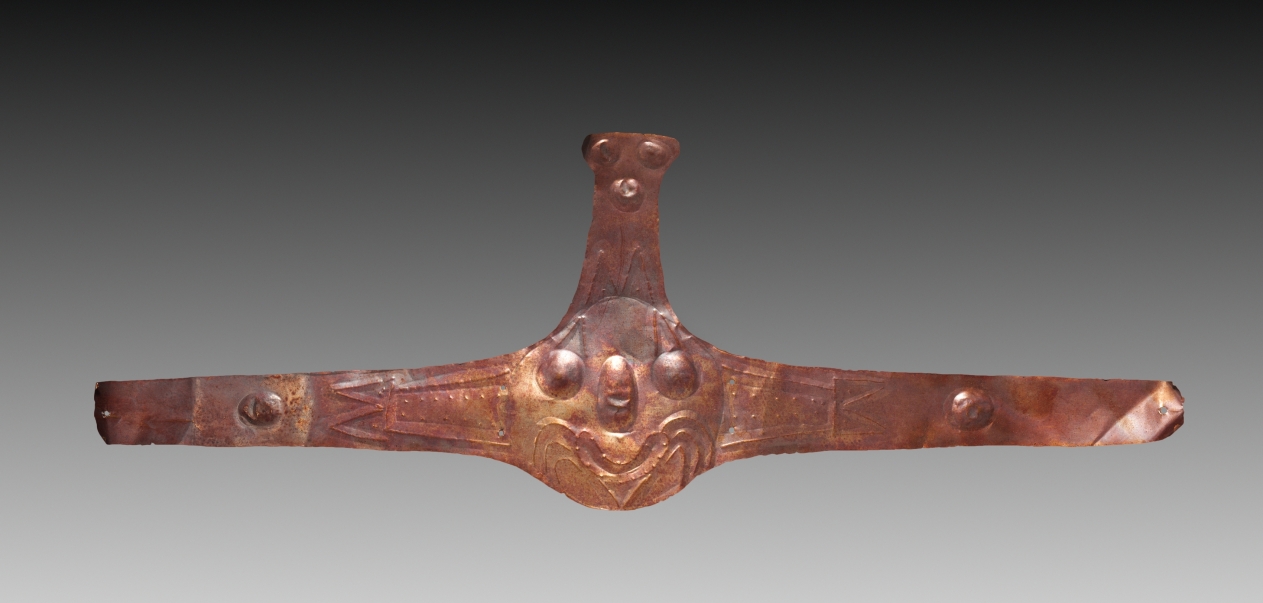
Forehead Ornament (100 BCE–700 CE) is in the Cleveland Museum of Art collection.
The work and its context
The museum's open-access catalogue describes the work:
Nasca figures, like one on a bowl nearby, are shown wearing such forehead ornaments and mouth masks similar to these. The mouth mask hung from the nasal septum, the oval opening surrounding the mouth and the bristles positioned as feline whiskers, here transformed to serpents. Both were cut from sheet gold; details were worked freehand while the sheet rested on a soft surface.
Object facts
- Title: Forehead Ornament
- Date: 100 BCE–700 CE
- Culture: Peru, South Coast, Nasca
- Type: Jewelry
- Technique: hammered gold alloy
- Dimensions: Overall: 27.4 x 9.3 cm (10 13/16 x 3 11/16 in.)
- Collection: AA - Andes
- Department: Art of the Americas
- Accession number: 1940.509
A detail from the museum
Tumbaga is an alloy made by blending gold with copper, which may give the gold a rosy hue.
Collection credit
The Norweb Collection
View the collection record
See the museum's photographs and full catalogue entry. Catalogue text is reproduced from the Cleveland Museum of Art's open-access data, with HTML formatting removed. This object and its supplied image are designated CC0.
Sources
More in Lifestyle
Keep reading