Fourth-Phase Chief Blanket Style Rug (c. 1900): Art, History and Details
Fourth-Phase Chief Blanket Style Rug at the Cleveland Museum of Art: c. 1900, wool (handspun, Germantown, and bayeta): tapestry weave. Explore the work's context, creator attribution and collection history.
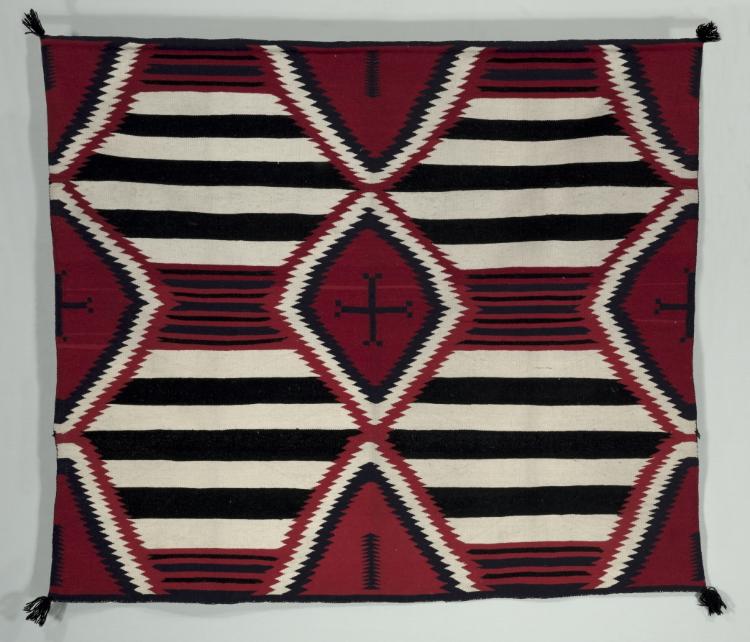
Fourth-Phase Chief Blanket Style Rug (c. 1900) is in the Cleveland Museum of Art collection.
The work and its context
The museum's open-access catalogue describes the work:
This rug is modeled on a coveted Diné (Navajo) garment type—a waterproof blanket worn around the shoulders. By the late 1700s, other Natives traded avidly for such blankets, which are classified according to design phases and known as “chief’s blankets,” a misnomer since the Diné have no chiefs. In the late 1800s, old Indigenous trade outlets collapsed, especially after the disastrous imprisonment of the Diné at Bosque Redondo in the 1860s. Responding to the dramatically transformed landscape in the aftermath, Diné weavers began to shift from making garments for Indigenous use, including trade, to creating items for the outside collectors’ market, such as rugs like this one.
Object facts
- Title: Fourth-Phase Chief Blanket Style Rug
- Date: c. 1900
- Culture: Native North American, Southwest, Navajo (Diné)
- Type: Textile
- Technique: wool (handspun, Germantown, and bayeta): tapestry weave
- Dimensions: Overall: 178.4 x 151.1 cm (70 1/4 x 59 1/2 in.)
- Collection: T - Native North American
- Department: Textiles
- Accession number: 1937.903
Collection credit
Gift of Amelia Elizabeth White
View the collection record
See the museum's photographs and full catalogue entry. Catalogue text is reproduced from the Cleveland Museum of Art's open-access data, with HTML formatting removed. This object and its supplied image are designated CC0.
Sources
More in Lifestyle
Keep reading