Fragment of a Double Capital: Mary and Martha at the Raising of Lazarus (1145–1165): Art, History and Details
Fragment of a Double Capital: Mary and Martha at the Raising of Lazarus at the Cleveland Museum of Art: 1145–1165, quartz sandstone with traces of polychromy. Explore the work's context, creator attribution and collection history.
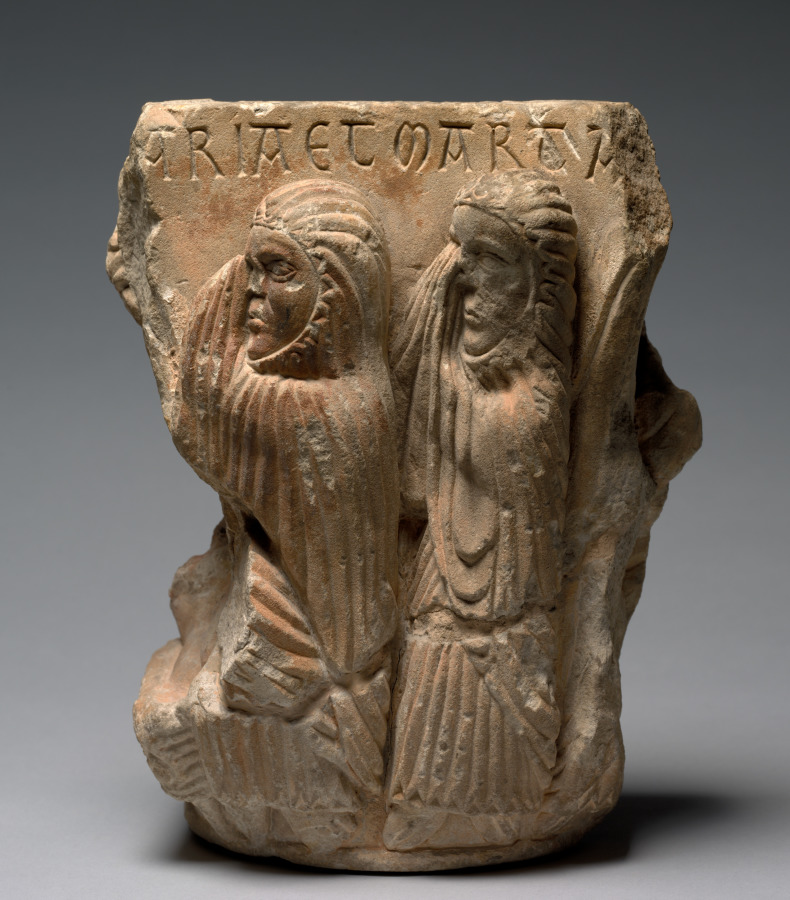
Fragment of a Double Capital: Mary and Martha at the Raising of Lazarus (1145–1165) is in the Cleveland Museum of Art collection.
The work and its context
The museum's open-access catalogue describes the work:
The front face of this capital fragment presents the two mourning women identified by the inscription above: MARIA ET MARTA. On the left face appears the body of Lazarus in a sarcophagus bearing Christ's words: VENI FORAS ("[Lazarus], come forth" [John 11:43]). The Raising of Lazarus is one of the most popular themes in Christian art. This miracle represents Christ's power over death and thus prefigures the Resurrection. It also speaks of the hope of resurrection for all individuals, a common theme in early Christian catacombs and sarcophagi. The subject is less prevalent in sculpture of the Romanesque period, though quite popular in other media.
Object facts
- Title: Fragment of a Double Capital: Mary and Martha at the Raising of Lazarus
- Date: 1145–1165
- Culture: Southwest France, Ariège, region of Foix, mid-12th century
- Type: Sculpture
- Technique: quartz sandstone with traces of polychromy
- Dimensions: Overall: 30.2 x 22.9 x 17.2 cm (11 7/8 x 9 x 6 3/4 in.)
- Collection: MED - Romanesque
- Department: Medieval Art
- Accession number: 1968.35
Collection credit
Purchase from the J. H. Wade Fund
View the collection record
See the museum's photographs and full catalogue entry. Catalogue text is reproduced from the Cleveland Museum of Art's open-access data, with HTML formatting removed. This object and its supplied image are designated CC0.
Sources
More in Lifestyle
Keep reading