Fragment of a Shawl Border (c. 1815–25): Art, History and Details
Fragment of a Shawl Border at the Cleveland Museum of Art: c. 1815–25, wool and silk: tapestry twill. Explore the work's context, creator attribution and collection history.
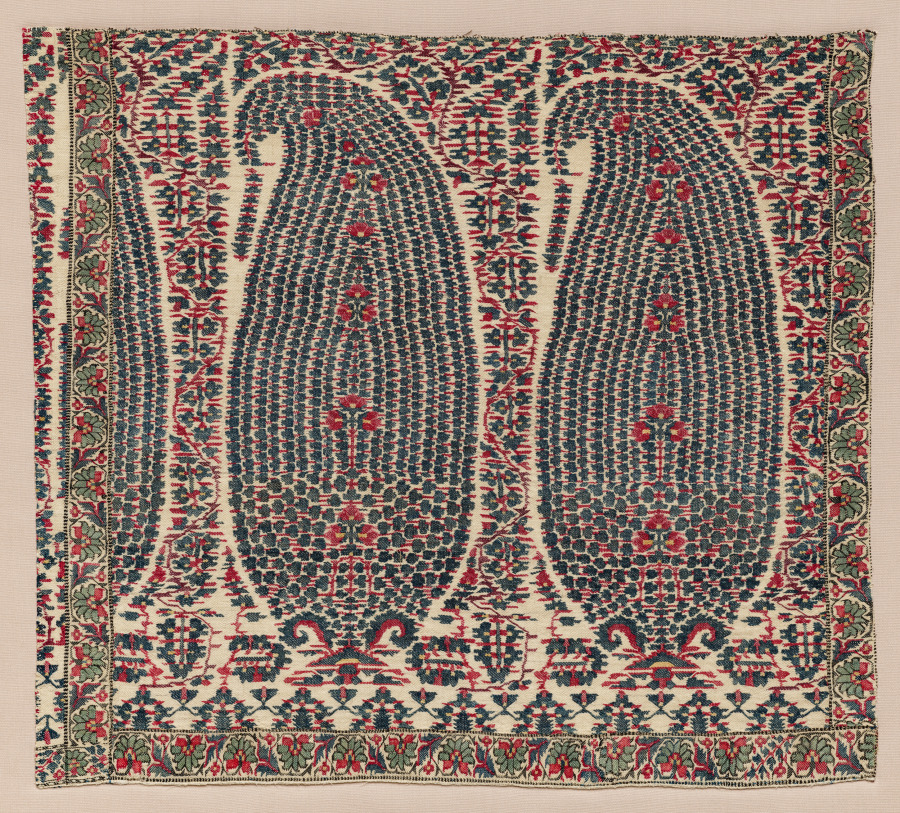
Fragment of a Shawl Border (c. 1815–25) is in the Cleveland Museum of Art collection.
The work and its context
The museum's open-access catalogue describes the work:
Many Kashmiri textiles, even those from the early 1800s, come down to us in fragments. This shawl border was once a part of a larger piece, which could have simply been draped over the body or stitched to the hem of a garment (as many European women did). Owning and wearing such luxury textiles would have been part of indicating one’s social status. Although incomplete, this work still shows the general pattern of the larger shawl, and it retains its vibrant and hypnotizing original color. Dyes were plant-based and are liable to wash out.
Object facts
- Title: Fragment of a Shawl Border
- Date: c. 1815–25
- Culture: Kashmir
- Type: Textile
- Technique: wool and silk: tapestry twill
- Dimensions: Overall: 35.9 x 40.3 cm (14 1/8 x 15 7/8 in.); Mounted: 54 x 58.4 cm (21 1/4 x 23 in.)
- Collection: Textiles
- Department: Textiles
- Accession number: 1934.330
A detail from the museum
Red dyes for textiles could be made from pomegranate skins.
Collection credit
Gift of Dr. E. Rosencrantz
Further reading listed by the museum
- Ames, Frank. The Kashmir Shawl and Its Indo-French Influence. Woodbridge, Suffolk: Antique Collectors' Club, 1997.
View the collection record
See the museum's photographs and full catalogue entry. Catalogue text is reproduced from the Cleveland Museum of Art's open-access data, with HTML formatting removed. This object and its supplied image are designated CC0.
Sources
More in Lifestyle
Keep reading