Fragment of Silk Taffeta with “Rose and Nightingale” Motif (1700s): Art, History and Details
Fragment of Silk Taffeta with “Rose and Nightingale” Motif at the Cleveland Museum of Art: 1700s, Silk and metallic thread: taffeta, brocaded. Explore the work's context, creator attribution and collection history.
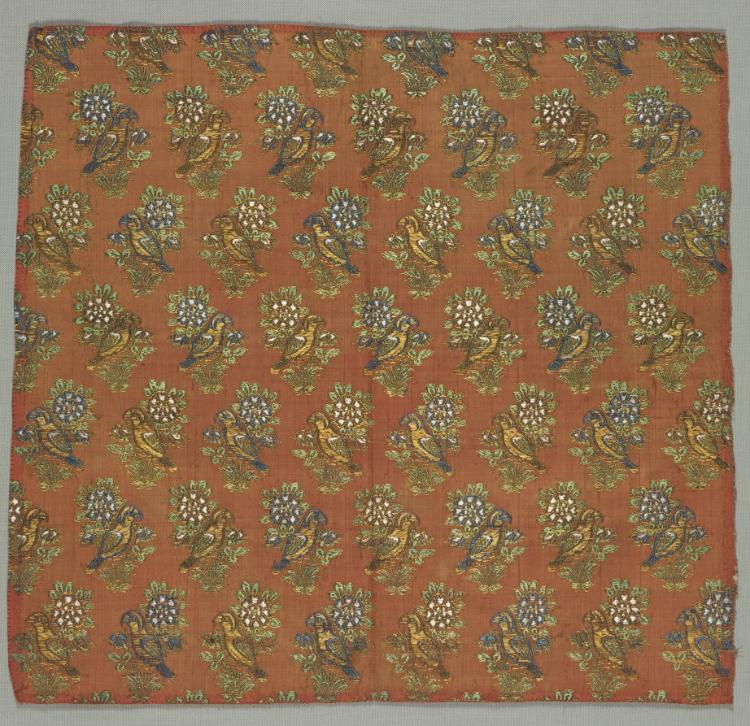
Fragment of Silk Taffeta with “Rose and Nightingale” Motif (1700s) is in the Cleveland Museum of Art collection.
The work and its context
The museum's open-access catalogue describes the work:
A luxurious textile like this would have been used for courtly robes or coats in Safavid Iran. The bird-and-flower motif is known as gul-u-bulbul in Persian, meaning “rose and nightingale.” The motif references the poetic image of a nightingale plaintively singing to an indifferent rose as a metaphor for unrequited human love as well as the soul’s desire for mystical union with the divine.
Object facts
- Title: Fragment of Silk Taffeta with “Rose and Nightingale” Motif
- Date: 1700s
- Culture: Iran, Safavid period (1501–1722)
- Type: Textile
- Technique: Silk and metallic thread: taffeta, brocaded
- Dimensions: Overall: 38.1 x 40.6 cm (15 x 16 in.); Mounted: 48.3 x 50.8 cm (19 x 20 in.)
- Collection: T - Islamic
- Department: Textiles
- Accession number: 1943.91
Collection credit
Gift of Mrs. Fred R. White
View the collection record
See the museum's photographs and full catalogue entry. Catalogue text is reproduced from the Cleveland Museum of Art's open-access data, with HTML formatting removed. This object and its supplied image are designated CC0.
Sources
More in Lifestyle
Keep reading