Frog Amulet (c. 1380–1330 BCE): Art, History and Details
Frog Amulet at the Cleveland Museum of Art: c. 1380–1330 BCE, polychrome faience. Explore the work's context, creator attribution and collection history.
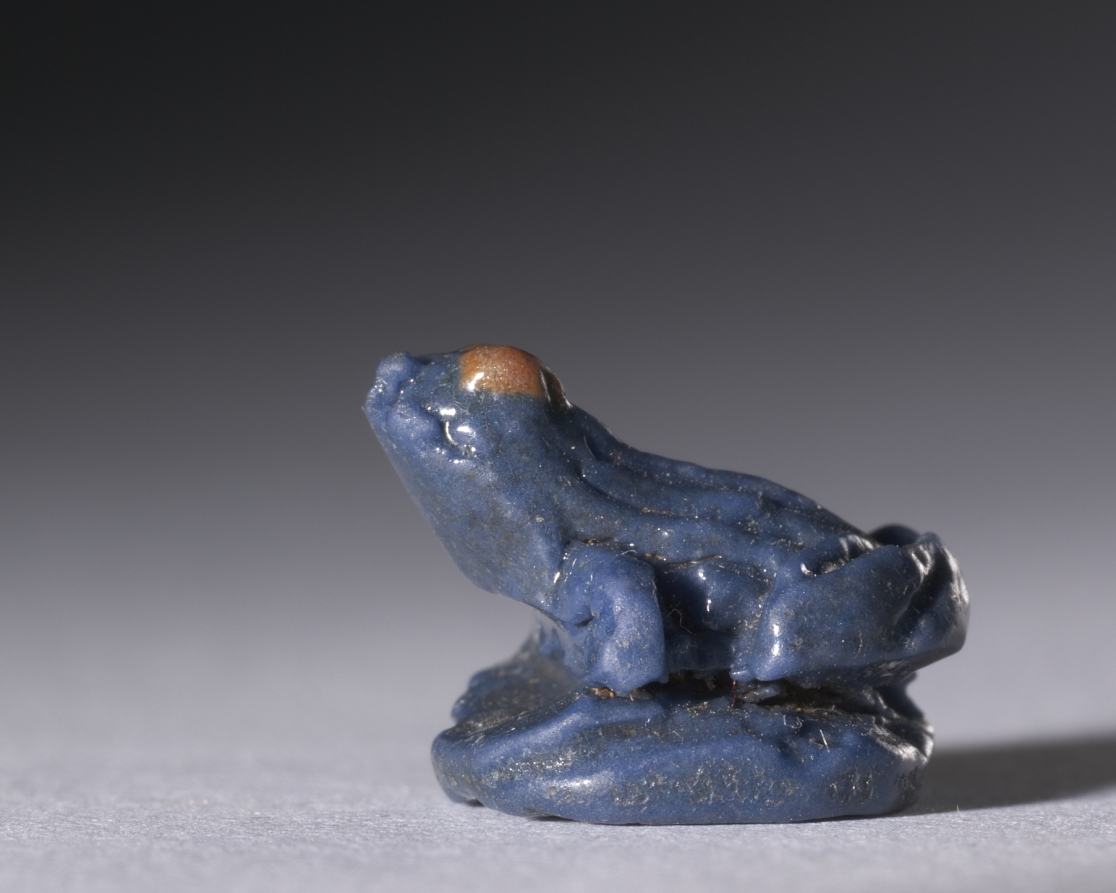
Frog Amulet (c. 1380–1330 BCE) is in the Cleveland Museum of Art collection.
The work and its context
The museum's open-access catalogue describes the work:
The frog, because of its numerous offspring, was a symbol of fertility. In fact, the hieroglyphic sign for 100,000 was a tadpole. Frog amulets were very popular both in semiprecious stone and in faience, and were worn by women hoping for an easy delivery. Both sexes wore the frog in expectation of a successful rebirth in the afterlife.
Object facts
- Title: Frog Amulet
- Date: c. 1380–1330 BCE
- Culture: Egypt, New Kingdom (1540–1069 BCE), Dynasty 18
- Type: Amulets
- Technique: polychrome faience
- Dimensions: Overall: 0.8 x 0.9 cm (5/16 x 3/8 in.)
- Collection: Egypt - New Kingdom
- Department: Egyptian and Ancient Near Eastern Art
- Accession number: 1980.123
A detail from the museum
This frog amulet was made from faience, a fine type of self-glazing ceramic that is characteristically turquoise blue. It is a representation of Heqet, the frog goddess associated with childbirth and fertility.
Collection credit
Gift of Cyril and Jessica Aldred
Further reading listed by the museum
- Cleveland Museum of Art, and Jenifer Neils. The World of Ceramics: Masterpieces from the Cleveland Museum of Art. Cleveland: The Museum in cooperation with Indiana University Press, 1982.
- Berman, Lawrence M., and Kenneth J. Bohač. Catalogue of Egyptian Art: The Cleveland Museum of Art. Cleveland, OH: Cleveland Museum of Art, 1999.
View the collection record
See the museum's photographs and full catalogue entry. Catalogue text is reproduced from the Cleveland Museum of Art's open-access data, with HTML formatting removed. This object and its supplied image are designated CC0.
Sources
More in Lifestyle
Keep reading