Frog Pendant (c. 1000–1550): Art, History and Details
Frog Pendant at the Cleveland Museum of Art: c. 1000–1550, cast gold. Explore the work's context, creator attribution and collection history.
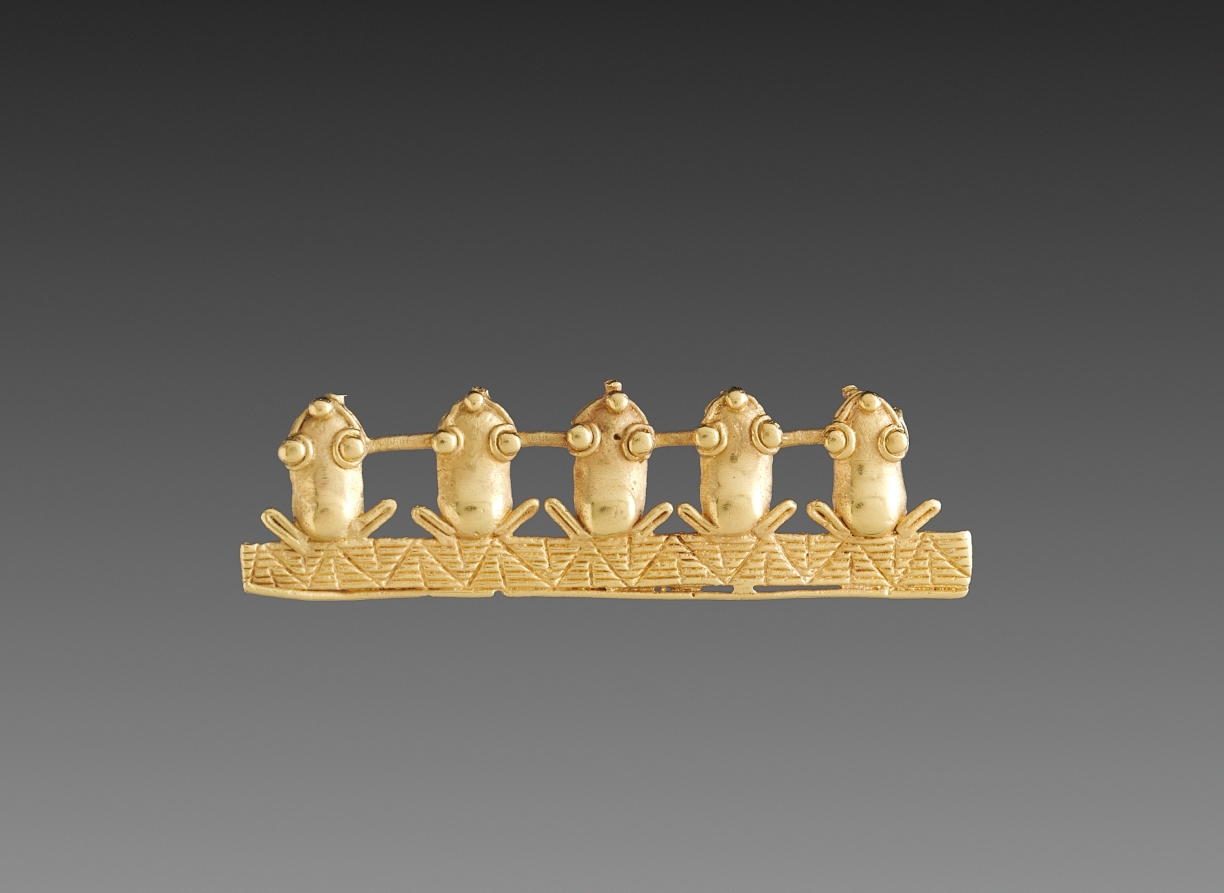
Frog Pendant (c. 1000–1550) is in the Cleveland Museum of Art collection.
The work and its context
The museum's open-access catalogue describes the work:
In general, frogs and toads symbolize life-giving water and the green growth it promotes. More surprising is their mythical role as keepers or donors of fire, an association perhaps enhanced by the bright colors that many frogs "flash" when startled, a form of protection. Brightly colored frogs, including those with golden tones, also produce very poisonous toxins, which in part led to a final connection with the underworld and death.
Object facts
- Title: Frog Pendant
- Date: c. 1000–1550
- Culture: Panama, Veraguas-Chiriquí style, 11th-16th century
- Type: Metalwork
- Technique: cast gold
- Dimensions: Overall: 2 x 6.8 x 0.7 cm (13/16 x 2 11/16 x 1/4 in.)
- Collection: AA - Intermediate Region
- Department: Art of the Americas
- Accession number: 1963.250
Collection credit
Gift of Mrs. Malcolm L. McBride
View the collection record
See the museum's photographs and full catalogue entry. Catalogue text is reproduced from the Cleveland Museum of Art's open-access data, with HTML formatting removed. This object and its supplied image are designated CC0.
Sources
More in Lifestyle
Keep reading