Ganesh (c. 1890): Art, History and Details
Ganesh at the Cleveland Museum of Art: c. 1890, Gum tempera, graphite, and tin on paper lined with cloth. Explore the work's context, creator attribution and collection history.
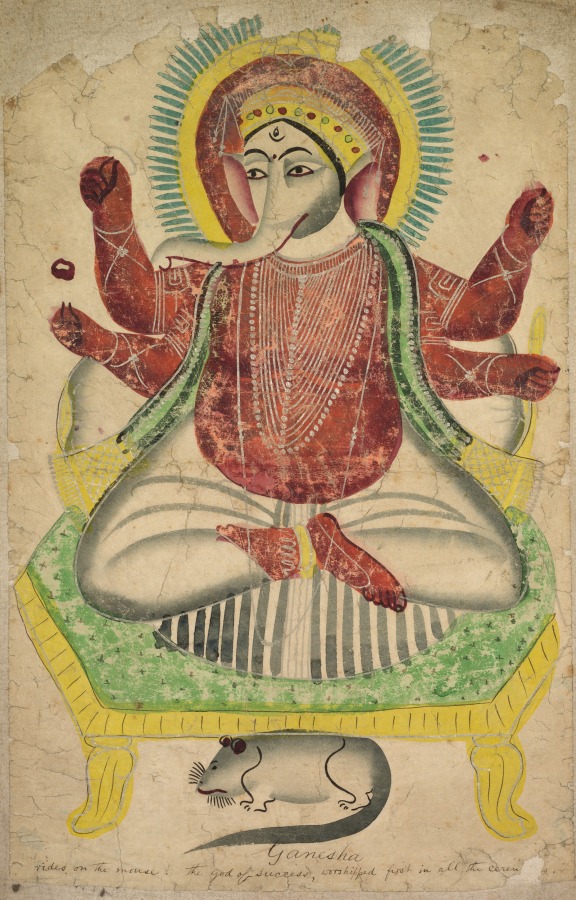
Ganesh (c. 1890) is in the Cleveland Museum of Art collection.
The work and its context
The museum's open-access catalogue describes the work:
The elephant-headed deity who is worshipped as the remover of obstacles is shown here seated in majesty with a radiant halo. The painting has been executed in the rapid, gestural style used by artists at Kalighat to create inexpensive souvenirs for pilgrims to bring home for veneration in domestic devotional spaces.
Object facts
- Title: Ganesh
- Date: c. 1890
- Culture: Eastern India, Bengal, Kolkata, Kalighat
- Type: Painting
- Technique: Gum tempera, graphite, and tin on paper lined with cloth
- Dimensions: Secondary Support: 47 x 30.5 cm (18 1/2 x 12 in.); Painting only: 43 x 27.4 cm (16 15/16 x 10 13/16 in.)
- Collection: Indian Art
- Department: Indian and Southeast Asian Art
- Accession number: 2003.98
A detail from the museum
His copious jewlery has been painted in tin, a less expensive metallic pigment than silver.
Collection credit
Gift of William E. Ward in memory of his wife, Evelyn Svec Ward
View the collection record
See the museum's photographs and full catalogue entry. Catalogue text is reproduced from the Cleveland Museum of Art's open-access data, with HTML formatting removed. This object and its supplied image are designated CC0.
Sources
More in Lifestyle
Keep reading
Related stories