Gaudi Ragini (c. 1700–1725): Art, History and Details
Gaudi Ragini at the Cleveland Museum of Art: c. 1700–1725, Gum tempera, ink, and gold on paper. Explore the work's context, creator attribution and collection history.
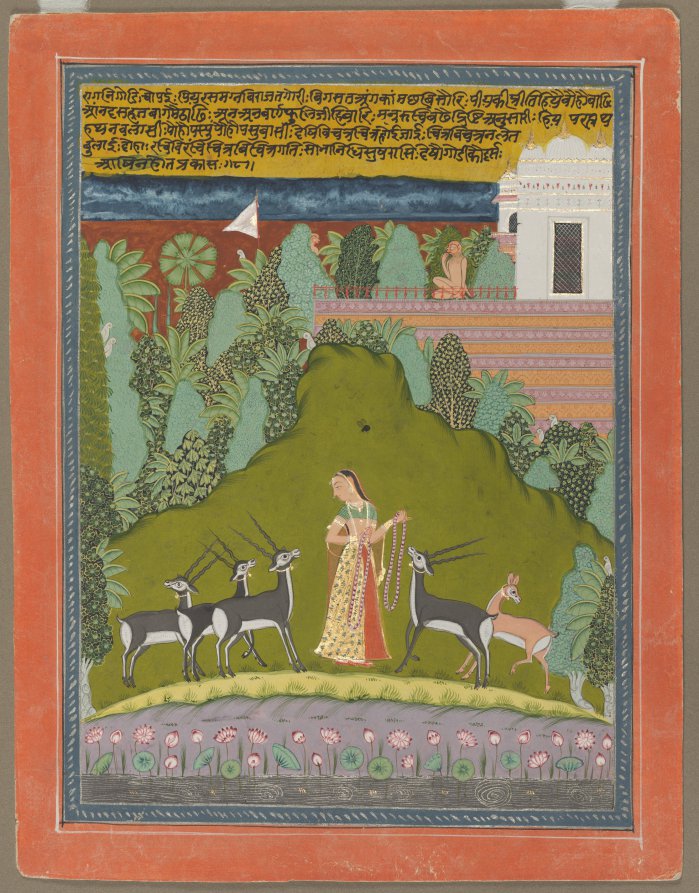
Gaudi Ragini (c. 1700–1725) is in the Cleveland Museum of Art collection.
The work and its context
The museum's open-access catalogue describes the work:
Adept in the arts of love, according to the verse, a sixteen-year-old girl “tarries in the garden, confused of mind,” holding flowers from the wishing tree, no companion with her. Four black bucks seem to have emerged from the dense woods, attracted to her, while monkeys leer at her from above. The shining white architecture atop sherbet-hued walls and the tall peaked hill are characteristic of paintings from the Rajput kingdom of Amber, which would later be renamed Jaipur. The music of Gauri Ragini is intended to be enjoyed during the winter months.
Object facts
- Title: Gaudi Ragini
- Date: c. 1700–1725
- Culture: India, Rajasthan, probably Jaipur, 18th century
- Type: Painting
- Technique: Gum tempera, ink, and gold on paper
- Dimensions: Image: 25.5 x 19 cm (10 1/16 x 7 1/2 in.); Overall: 30.7 x 23.8 cm (12 1/16 x 9 3/8 in.)
- Collection: Indian Art
- Department: Indian and Southeast Asian Art
- Accession number: 1968.109
Collection credit
Gift of the American Foundation for the Maud E. and Warren H. Corning Botanical Collection
Further reading listed by the museum
- The Cleveland Museum of Art. Handbook of the Cleveland Museum of Art/1978. Cleveland, OH: The Cleveland Museum of Art, 1978.
View the collection record
See the museum's photographs and full catalogue entry. Catalogue text is reproduced from the Cleveland Museum of Art's open-access data, with HTML formatting removed. This object and its supplied image are designated CC0.
Sources
More in Lifestyle
Keep reading