Geometrically Patterned Female Figure (400–100 BCE): Art, History and Details
Geometrically Patterned Female Figure at the Cleveland Museum of Art: 400–100 BCE, Ceramic, slip. Explore the work's context, creator attribution and collection history.
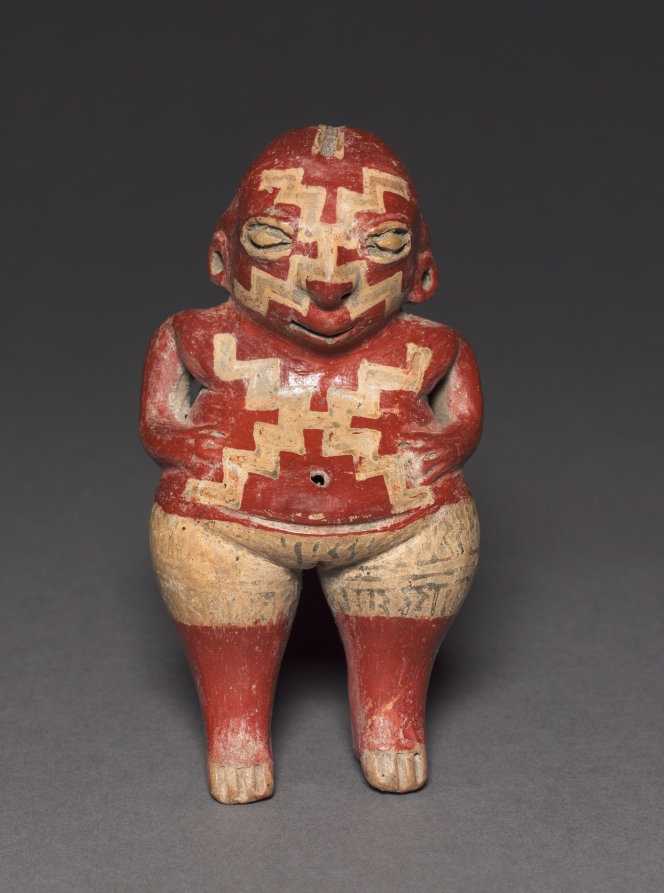
Geometrically Patterned Female Figure (400–100 BCE) is in the Cleveland Museum of Art collection.
The work and its context
The museum's open-access catalogue describes the work:
Artists of the Chupícuaro culture, based to the north of modern-day Mexico City, may be best known for hollow ceramic figurines like this one. Always female and often apparently pregnant, such figurines commonly are painted with stepped geometric motifs in vibrant, highly burnished slips (creamy mixtures of water and crushed minerals). The meanings of the motifs and the figurines themselves are poorly understood.
Object facts
- Title: Geometrically Patterned Female Figure
- Date: 400–100 BCE
- Culture: Mesoamerica, Guanajuato or Michoacán, Chupícuaro
- Type: Sculpture
- Technique: Ceramic, slip
- Dimensions: Overall: 15.6 x 8 x 5.7 cm (6 1/8 x 3 1/8 x 2 1/4 in.)
- Collection: AA - Mesoamerica
- Department: Art of the Americas
- Accession number: 1990.155
A detail from the museum
This figure was formed in two halves that were hollowed out and joined at the hips.
Collection credit
Gift of Mr. and Mrs. James C. Gruener
Further reading listed by the museum
- Young-Sánchez, Margaret. "The Gruener Collection of Pre-Columbian Art." The Bulletin of the Cleveland Museum of Art 79, no. 7 (1992): 234-75.
View the collection record
See the museum's photographs and full catalogue entry. Catalogue text is reproduced from the Cleveland Museum of Art's open-access data, with HTML formatting removed. This object and its supplied image are designated CC0.
Sources
More in Lifestyle
Keep reading