Goblet (Berkemeyer) (c. 1525–50): Art, History and Details
Goblet (Berkemeyer) at the Cleveland Museum of Art: c. 1525–50, green glass. Explore the work's context, creator attribution and collection history.
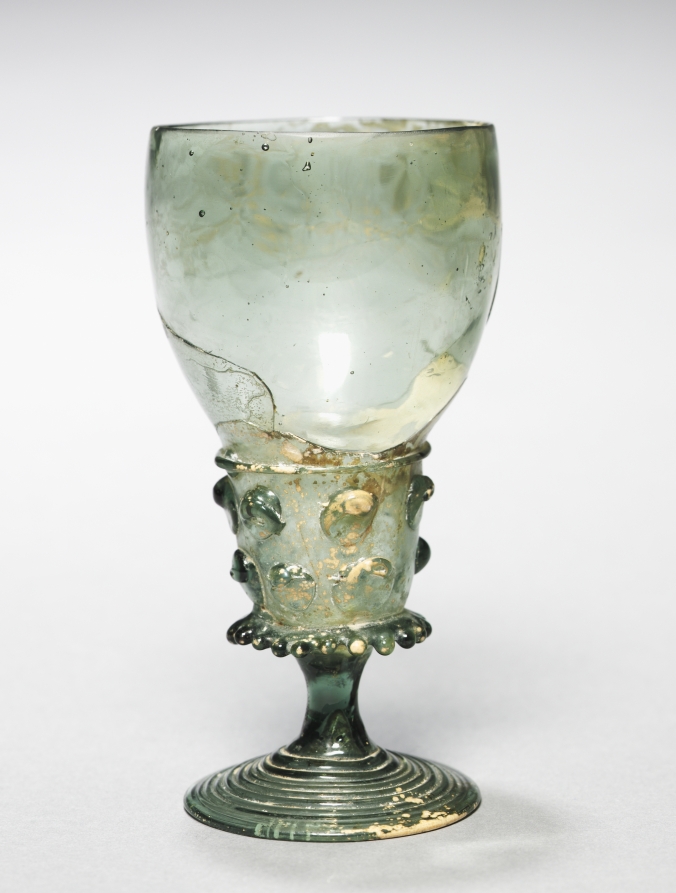
Goblet (Berkemeyer) (c. 1525–50) is in the Cleveland Museum of Art collection.
The work and its context
The museum's open-access catalogue describes the work:
Green goblets were frequently used for white wine, since the color was thought to enhance the wine’s golden shade. This goblet ornamented with prunts, or glass blobs, has a funnel-shaped mouth and was typical of German and Netherlandish manufacture in the 1500s and 1600s. The green color, caused by iron impurities in the local sand, is typical of Waldglas (“forest glass” in German), made in the forests of Central Europe.
Object facts
- Title: Goblet (Berkemeyer)
- Date: c. 1525–50
- Culture: Germany
- Type: Glass
- Technique: green glass
- Dimensions: Overall: 12.6 cm (4 15/16 in.)
- Collection: Decorative Arts
- Department: Decorative Art and Design
- Accession number: 1991.16
Collection credit
Purchase from the J. H. Wade Fund
View the collection record
See the museum's photographs and full catalogue entry. Catalogue text is reproduced from the Cleveland Museum of Art's open-access data, with HTML formatting removed. This object and its supplied image are designated CC0.
Sources
More in Lifestyle
Keep reading