Gold Weight (abrammuo): Antelope (1800s): Art, History and Details
Gold Weight (abrammuo): Antelope at the Cleveland Museum of Art: 1800s, Copper alloy. Explore the work's context, creator attribution and collection history.
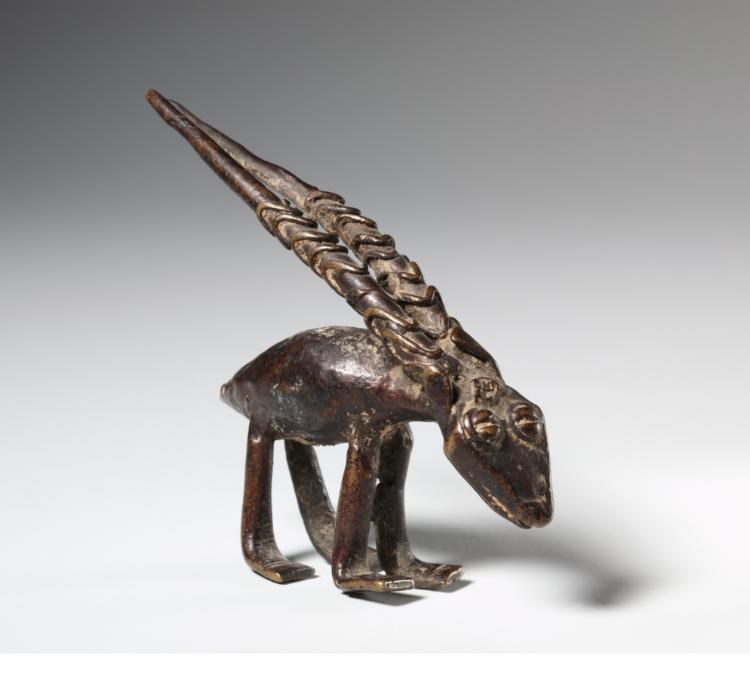
Gold Weight (abrammuo): Antelope (1800s) is in the Cleveland Museum of Art collection.
The work and its context
The museum's open-access catalogue describes the work:
The wealth and power of the Asante kingdom were derived primarily from its massive gold resources. Since at least 1600, small weights in brass and bronze were used to weigh gold dust and nuggets. The royal court had the most elaborate store of weights, while commoners often had about a dozen. Their imagery falls into two broad categories: geometric and representational. The latter often refers to proverbs, which used judiciously, mark a wise person. The weight in the form of an antelope with enormous horns may refer to the proverb "had I known"—a visual pun between the length of the horns and the idea of hindsight as perfect vision.
Object facts
- Title: Gold Weight (abrammuo): Antelope
- Date: 1800s
- Culture: Africa, West Africa, Ghana, Akan-style artist
- Type: Tools and Equipment
- Technique: Copper alloy
- Dimensions: Overall: 5.2 cm (2 1/16 in.)
- Collection: African Art
- Department: African Art
- Accession number: 1935.306
A detail from the museum
To make this casting, a brass caster first modeled the shape in wax.
Collection credit
James Albert Ford Memorial Fund
Further reading listed by the museum
- Museum of Modern Art (New York, N.Y.), and James Johnson Sweeney. African Negro Art. New York: Museum of Modern Art, 1935.
View the collection record
See the museum's photographs and full catalogue entry. Catalogue text is reproduced from the Cleveland Museum of Art's open-access data, with HTML formatting removed. This object and its supplied image are designated CC0.
Sources
More in Lifestyle
Keep reading