Gorge de la Nouvelle Route des Eaux-Chaudes (c. 1851): Art, History and Details
Gorge de la Nouvelle Route des Eaux-Chaudes at the Cleveland Museum of Art: c. 1851, salt print from a waxed paper negative. Explore the work's context, creator attribution and collection history.
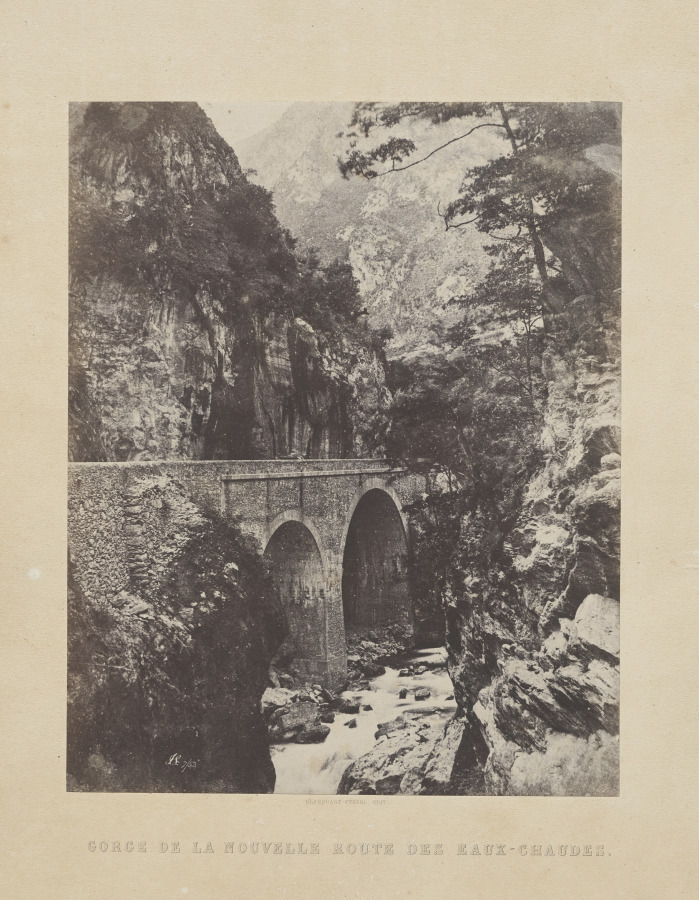
Gorge de la Nouvelle Route des Eaux-Chaudes (c. 1851) is in the Cleveland Museum of Art collection. The museum's creator attribution is John Stewart (British, 1800–1887).
The work and its context
The museum's open-access catalogue describes the work:
The town of Pau, in the foothills of the Pyrenees Mountains, was a popular vacation spot for British tourists and one of several centers for photography in France in the 1850s. John Stewart photographed the road that ran through the mountains to the village of Eaux-Chaudes. The town, a tourist destination since the late 1500s, had hot springs reputed to have healing waters. The road had just been built in 1849. It greatly eased access to Eaux-Chaudes and offered dramatic views.
Object facts
- Title: Gorge de la Nouvelle Route des Eaux-Chaudes
- Date: c. 1851
- Creator attribution: John Stewart (British, 1800–1887)
- Culture: England
- Type: Photograph
- Technique: salt print from a waxed paper negative
- Dimensions: Image: 26.7 x 21.6 cm (10 1/2 x 8 1/2 in.)
- Collection: PH - British 19th Century
- Department: Photography
- Accession number: 2021.68
Collection credit
Gift of Michael Mattis and Judith Hochberg
View the collection record
See the museum's photographs and full catalogue entry. Catalogue text is reproduced from the Cleveland Museum of Art's open-access data, with HTML formatting removed. This object and its supplied image are designated CC0.
Sources
More in Lifestyle
Keep reading