Gorget (Rei Miro) (1800s): Art, History and Details
Gorget (Rei Miro) at the Cleveland Museum of Art: 1800s, wood. Explore the work's context, creator attribution and collection history.
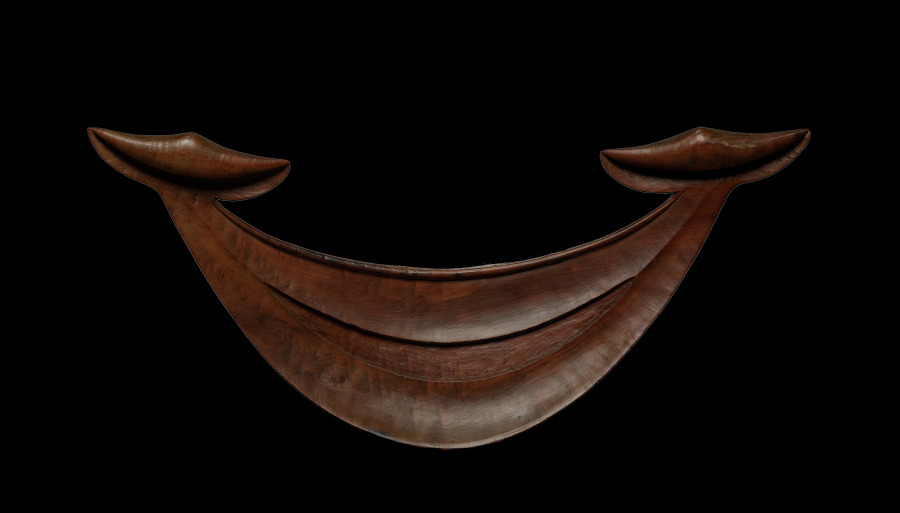
Gorget (Rei Miro) (1800s) is in the Cleveland Museum of Art collection.
The work and its context
The museum's open-access catalogue describes the work:
Elegant, crescent-shaped gorgets or chest ornaments known as rei miro (“necklace of wood”) were generally worn by chiefly women of Rapa Nui (Easter Island). The abstracted forms at the tips of this example replace the human heads that are more typical.
Object facts
- Title: Gorget (Rei Miro)
- Date: 1800s
- Culture: Pacific Islands, Polynesia, Rapa Nui (Easter Island)
- Type: Sculpture
- Technique: wood
- Dimensions: Overall: 30.8 x 69.8 cm (12 1/8 x 27 1/2 in.)
- Collection: Oceanic Art
- Department: Oceania
- Accession number: 1961.406
A detail from the museum
Chiefly women of Rapa Nui (Easter Island) wore crescent-shaped gorgets like this one.
Collection credit
The Mary Spedding Milliken Memorial Collection, Gift of William Mathewson Milliken
Further reading listed by the museum
- Trevaka Archaeological Outreach, Database Project
View the collection record
See the museum's photographs and full catalogue entry. Catalogue text is reproduced from the Cleveland Museum of Art's open-access data, with HTML formatting removed. This object and its supplied image are designated CC0.
Sources
More in Lifestyle
Keep reading