Gorgoneion Plaque (c. 525–475 BCE): Art, History and Details
Gorgoneion Plaque at the Cleveland Museum of Art: c. 525–475 BCE, terracotta. Explore the work's context, creator attribution and collection history.
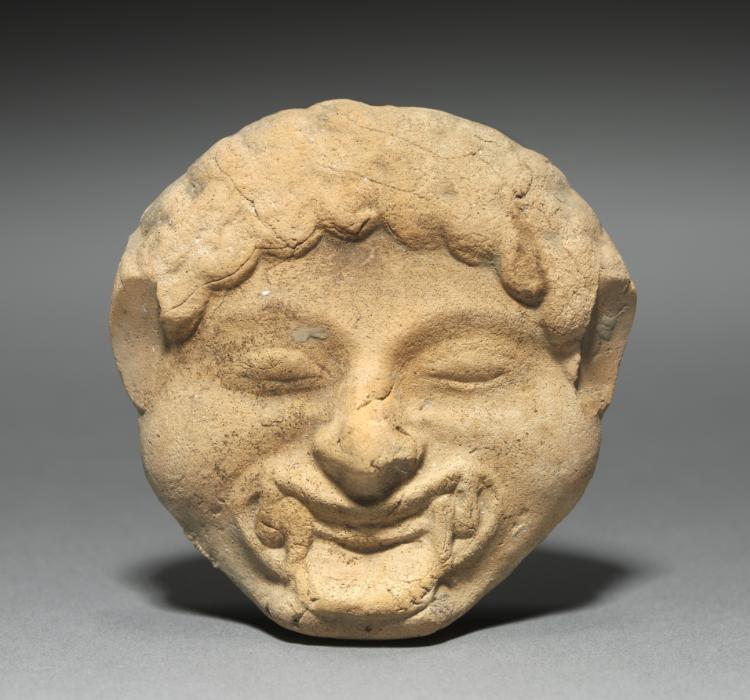
Gorgoneion Plaque (c. 525–475 BCE) is in the Cleveland Museum of Art collection.
The work and its context
The museum's open-access catalogue describes the work:
Probably meant to decorate the outside of a wooden coffin or other tomb furniture, this small mold-made terracotta plaque is one of two in the collection (click here for the other). Both bear gorgoneia, or frontal Gorgon faces, with snaky hair, sharp teeth, and protruding tongue, perhaps meant to ward off evils. A bit of fingerprint survives on the reverse, likely from its ancient maker.
Object facts
- Title: Gorgoneion Plaque
- Date: c. 525–475 BCE
- Culture: Greek / South Italian
- Type: Sculpture
- Technique: terracotta
- Dimensions: Overall: 6.9 x 6.9 cm (2 11/16 x 2 11/16 in.)
- Collection: GR - South Italy
- Department: Greek and Roman Art
- Accession number: 1996.34
A detail from the museum
The gorgoneion, or disembodied head of Medusa, may have served as protection against evils.
Collection credit
Gift of Robert Haber
View the collection record
See the museum's photographs and full catalogue entry. Catalogue text is reproduced from the Cleveland Museum of Art's open-access data, with HTML formatting removed. This object and its supplied image are designated CC0.
Sources
More in Lifestyle
Keep reading
Related stories