Gothic Bible (Vulgate) (c. 1275–1300): Art, History and Details
Gothic Bible (Vulgate) at the Cleveland Museum of Art: c. 1275–1300, ink, tempera, and gold on vellum. Explore the work's context, creator attribution and collection history.
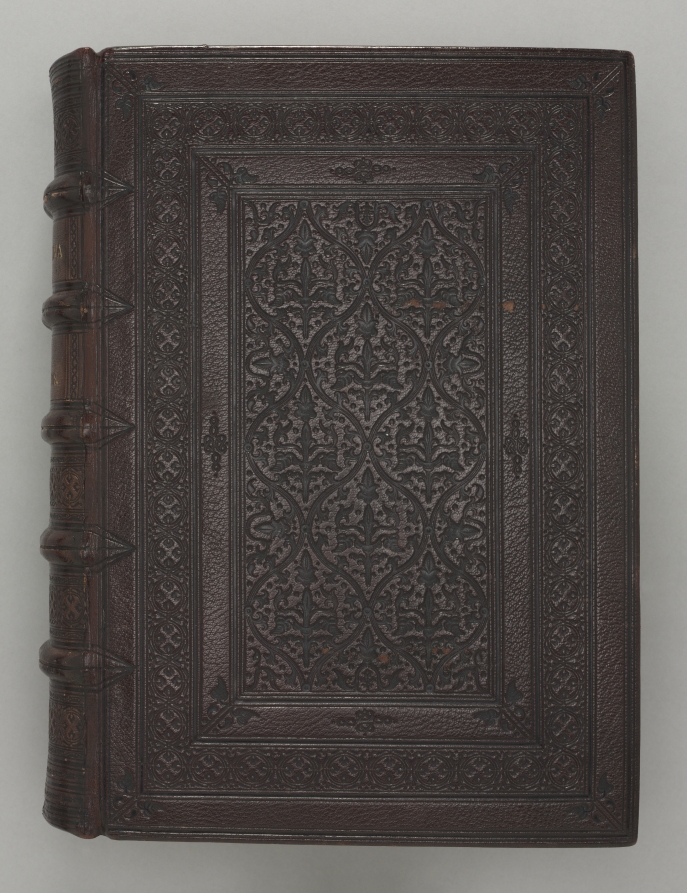
Gothic Bible (Vulgate) (c. 1275–1300) is in the Cleveland Museum of Art collection.
The work and its context
The museum's open-access catalogue describes the work:
Biblical manuscripts were highly prized and important possessions of churches, monasteries, cathedral schools, and universities throughout medieval Europe. The biblical texts were known as the vulgate, the translations made by Saint Jerome in the fourth century from Hebrew and Greek into Latin, which became the definitive and official Latin version of the Roman Church. In the 13th century, the bible was, for the first time, produced as a single volume with an officially sanctioned sequence to its books and chapters as illustrated by this example. The very extensive decoration of this bible is arranged hierarchically to indicate the relative importance of the various texts so that full or almost full-page initials mark the openings of the first prologue, Genesis, and the first Gospel; historiated initials mark the beginning of each book and illuminated initials mark the Prologues.
Object facts
- Title: Gothic Bible (Vulgate)
- Date: c. 1275–1300
- Culture: Southern France, Toulouse or Avignon, 13th century
- Type: Bound Volume
- Technique: ink, tempera, and gold on vellum
- Dimensions: Closed: 35.6 x 24.2 cm (14 x 9 1/2 in.)
- Collection: MED - Gothic
- Department: Medieval Art
- Accession number: 2008.2
A detail from the museum
Original texts of the Old and New Testaments were written in Greek and Hebrew.
Collection credit
John L. Severance Fund
Further reading listed by the museum
- BROOKE, Thomas. A Catalogue of the Manuscripts and Printed Books Collected by Thomas Brooke, and Preserved at Armitage Bridge House, Near Huddersfield. [With a Portrait.] L.P. Pp. vi. 759. Ellis & Elvey: London, 1891.
- University of Southern California. The Book As a Work of Art: An Exhibition of Books and Manuscripts from the Library of Mrs Edward Laurence Doheny : on View in the E.L. Doheny Jr. Memorial Library, University of Southern California, February 19 to March 9, 1935. [S.l.]: [s.n.], 1935.
- De Ricci, Seymour, W. J. Wilson, C. U. Faye, and W. H. Bond. Census of Medieval and Renaissance Manuscripts in the United States and Canada. New York: H.W. Wilson, 1935.
View the collection record
See the museum's photographs and full catalogue entry. Catalogue text is reproduced from the Cleveland Museum of Art's open-access data, with HTML formatting removed. This object and its supplied image are designated CC0.
Sources
More in Lifestyle
Keep reading