Gozu Tennō (Ox-Headed Plague Deity) (1100s): Art, History and Details
Gozu Tennō (Ox-Headed Plague Deity) at the Cleveland Museum of Art: 1100s, Wood with traces of color. Explore the work's context, creator attribution and collection history.
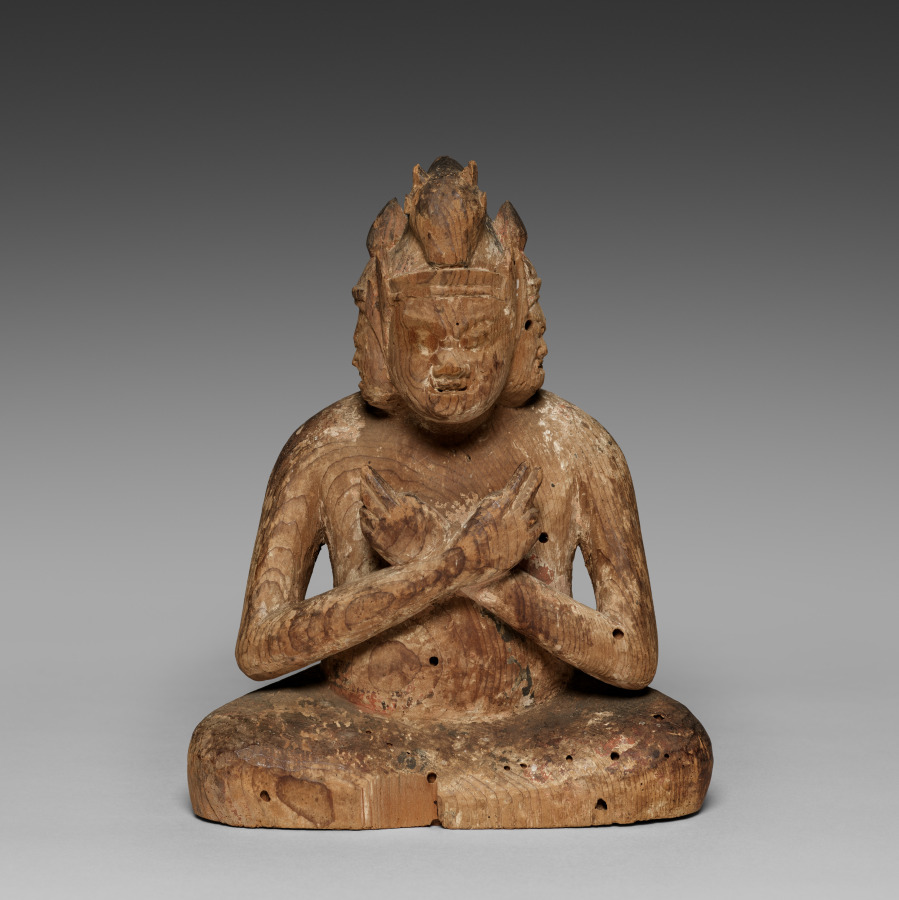
Gozu Tennō (Ox-Headed Plague Deity) (1100s) is in the Cleveland Museum of Art collection.
The work and its context
The museum's open-access catalogue describes the work:
Gozu Tennō is a deity who is capable of both bringing epidemics and dispelling them. His name is literally “Ox-Headed Celestial King.” He usually has three heads with an ox-head rising above his primary face. He sometimes holds a lasso and sword or an ax, but here holds his hands in a powerful gesture that may be designed to repel illness or promote healing.
Object facts
- Title: Gozu Tennō (Ox-Headed Plague Deity)
- Date: 1100s
- Culture: Japan, Heian period (794–1185)
- Type: Sculpture
- Technique: Wood with traces of color
- Dimensions: 22.5 x 18 x 9.6 cm (8 7/8 x 7 1/16 x 3 3/4 in.)
- Collection: Japanese Art
- Department: Japanese Art
- Accession number: 2025.10
A detail from the museum
The Gion Festival in Kyoto is related to belief in Gozu Tennō.
Collection credit
Lillian M. Kern Memorial Fund
View the collection record
See the museum's photographs and full catalogue entry. Catalogue text is reproduced from the Cleveland Museum of Art's open-access data, with HTML formatting removed. This object and its supplied image are designated CC0.
Sources
More in Lifestyle
Keep reading


