Grape Leaves from a Curtain (400s-500s): Art, History and Details
Grape Leaves from a Curtain at the Cleveland Museum of Art: 400s-500s, weft-faced plain weave with tapestry weave and supplementary weft wrapping; undyed linen and dyed wool. Explore the work's context, creator attribution and collection hi
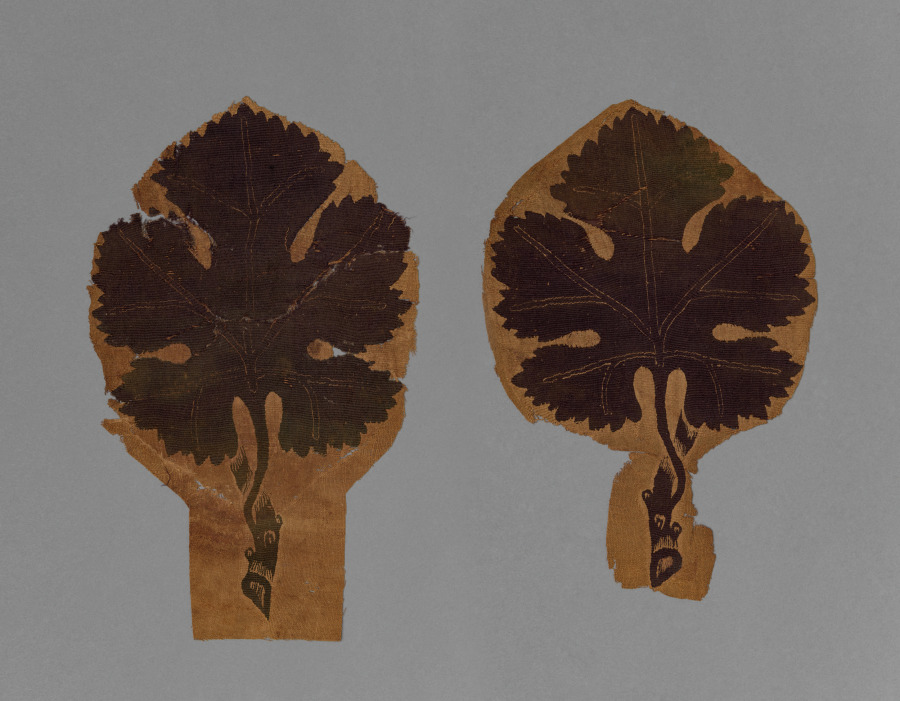
Grape Leaves from a Curtain (400s-500s) is in the Cleveland Museum of Art collection.
The work and its context
The museum's open-access catalogue describes the work:
This deep-purple grape leaf once decorated the plain linen ground of a curtain. It probably refers to Dionysus, the classical god of wine, whose cult was popular in Egypt through the 6th century.
Object facts
- Title: Grape Leaves from a Curtain
- Date: 400s-500s
- Culture: Egypt, Byzantine period
- Type: Textile
- Technique: weft-faced plain weave with tapestry weave and supplementary weft wrapping; undyed linen and dyed wool
- Dimensions: Average: 19 x 31.5 cm (7 1/2 x 12 3/8 in.)
- Collection: T - Coptic
- Department: Textiles
- Accession number: 1983.262
Collection credit
Purchase from the J. H. Wade Fund
View the collection record
See the museum's photographs and full catalogue entry. Catalogue text is reproduced from the Cleveland Museum of Art's open-access data, with HTML formatting removed. This object and its supplied image are designated CC0.
Sources
More in Lifestyle
Keep reading