Grapes (1700s): Art, History and Details
Grapes at the Cleveland Museum of Art: 1700s, hanging scroll, ink on silk. Explore the work's context, creator attribution and collection history.
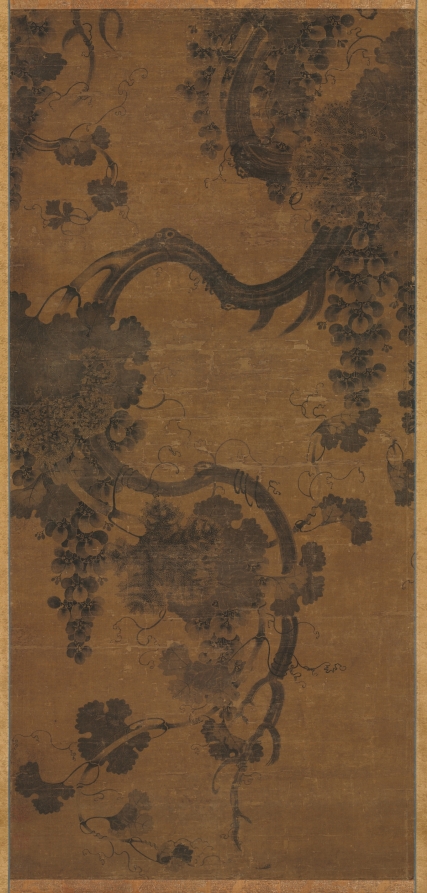
Grapes (1700s) is in the Cleveland Museum of Art collection.
The work and its context
The museum's open-access catalogue describes the work:
Grapes began to be employed as artistic motifs in Korean art after their introduction to the peninsula around the 600s through the Silk Road, the ancient global trade route. Artists used them to embellish the surfaces of mother-of-pearl lacquer boxes and blue-and-white porcelain, while scholar-poets composed poems about the luscious sweet sourness of green grapes. Grape paintings such as this were hung on a wall especially in a scholar’s elegant study during the summer season when deep blue grapes ripen.
Object facts
- Title: Grapes
- Date: 1700s
- Culture: Korea, Joseon dynasty (1392–1910)
- Type: Painting
- Technique: hanging scroll, ink on silk
- Dimensions: Image: 101 x 47 cm (39 3/4 x 18 1/2 in.); Overall: 176.5 x 73 cm (69 1/2 x 28 3/4 in.)
- Collection: ASIAN - Hanging scroll
- Department: Korean Art
- Accession number: 1999.43
A detail from the museum
Grape wine was introduced to the Korean court in the 1200s, but the common classes did not have many opportunities to enjoy it until the 20th century.
Collection credit
Mr. and Mrs. William H. Marlatt Fund
Further reading listed by the museum
- Cleveland Museum of Art, “Major Contemporary German Painting Acquired by CMA,” June 9, 1999, Cleveland Museum of Art Archives.
- Sŏn, Sŭng-hye. The Lure of Painted Poetry: Japanese and Korean Art. Cleveland, OH: Cleveland Museum of Art, 2011.
View the collection record
See the museum's photographs and full catalogue entry. Catalogue text is reproduced from the Cleveland Museum of Art's open-access data, with HTML formatting removed. This object and its supplied image are designated CC0.
Sources
More in Lifestyle
Keep reading