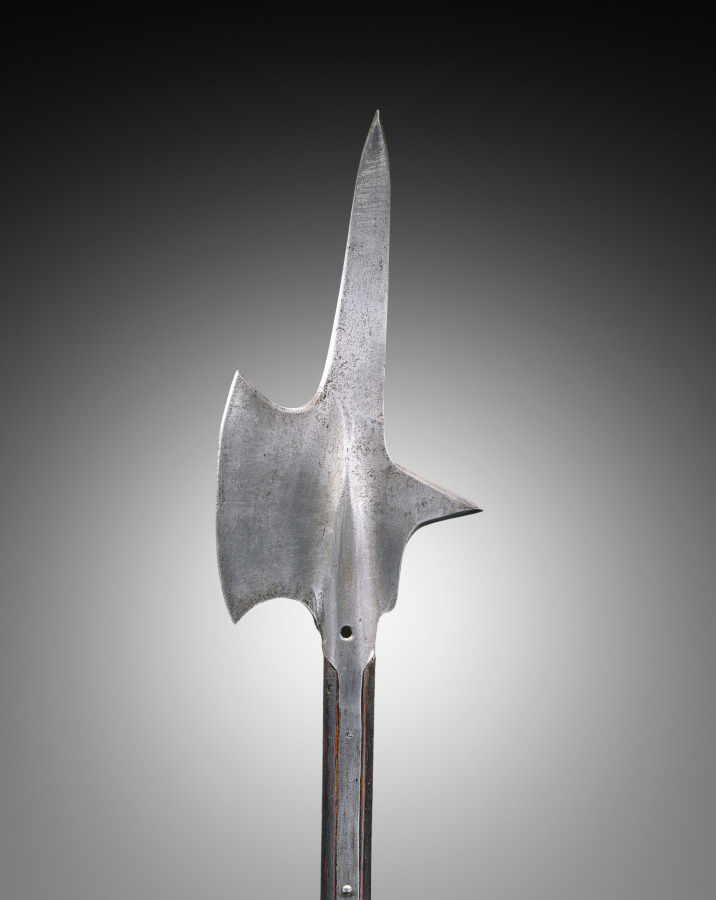
Halberd (c. 1480–1500): Art, History and Details
Halberd at the Cleveland Museum of Art: c. 1480–1500, steel; wood haft (rectangular with planed corners). Explore the work's context, creator attribution and collection history.
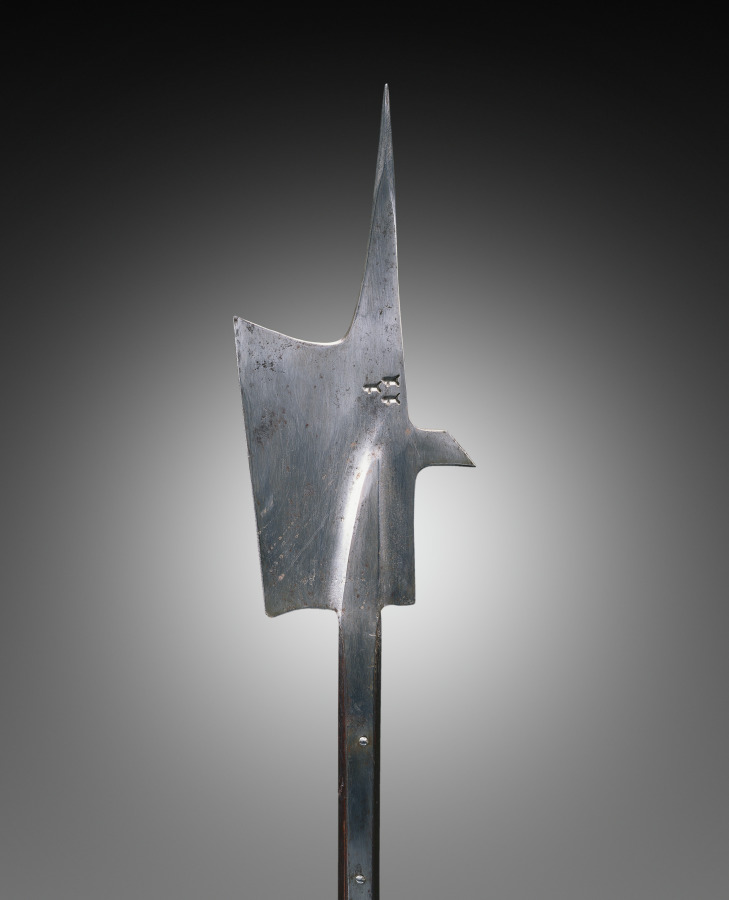
Halberd (c. 1480–1500) is in the Cleveland Museum of Art collection.
The work and its context
The museum's open-access catalogue describes the work:
The halberd was a staff weapon favored by European infantries (foot soldiers) of the 1400s and 1500s for its versatility and deadly effect. The word halberd comes from the German words Halm (staff) and Barte (axe). The halberd is, in fact, an axe that served multiple functions: the axe blade was used for hacking, the spike for thrusting, and the beak for piercing plate armor or for pulling a knight from his saddle. The halberd was used by shock troops (those who lead an attack) and by Swiss and German mercenaries. After about 1550, the halberd gradually became less functional. Its large blade provided space for coats of arms and insignia. By the late 1500s, the parade halberd had become a ceremonial weapon for palace guards.
Object facts
- Title: Halberd
- Date: c. 1480–1500
- Culture: Switzerland
- Type: Arms and Armor
- Technique: steel; wood haft (rectangular with planed corners)
- Dimensions: Overall: 205.7 cm (81 in.); Blade: 20.3 cm (8 in.)
- Collection: MED - Arms & Armor
- Department: Medieval Art
- Accession number: 1916.1556
A detail from the museum
A Franciscan monk wrote in the 1340s how terrible and fierce the Swiss, armed with halberds, were at the Battle of Morgarten.
Collection credit
Gift of Mr. and Mrs. John L. Severance
Further reading listed by the museum
- Catalogue of Arms and Armour. Vol. 1, 14th & 15th centuries. [Boston, Massachusetts]: [Frank Gair Macomber], [1900-1915].
- Gilchrist, Helen Ives. A Catalogue of the Collection of Arms & Armor Presented to the Cleveland Museum of Art by Mr. and Mrs. John Long Severance; 1916-1923. Cleveland: The Cleveland Museum of Art, 1924.
View the collection record
See the museum's photographs and full catalogue entry. Catalogue text is reproduced from the Cleveland Museum of Art's open-access data, with HTML formatting removed. This object and its supplied image are designated CC0.
Sources
More in Lifestyle
Keep reading