Hanuman spies Sita in the Ashoka Grove, from the “Shangri” Ramayana (c. 1700–25): Art, History and Details
Hanuman spies Sita in the Ashoka Grove, from the “Shangri” Ramayana at the Cleveland Museum of Art: c. 1700–25, Gum tempera and ink on paper. Explore the work's context, creator attribution and collection history.
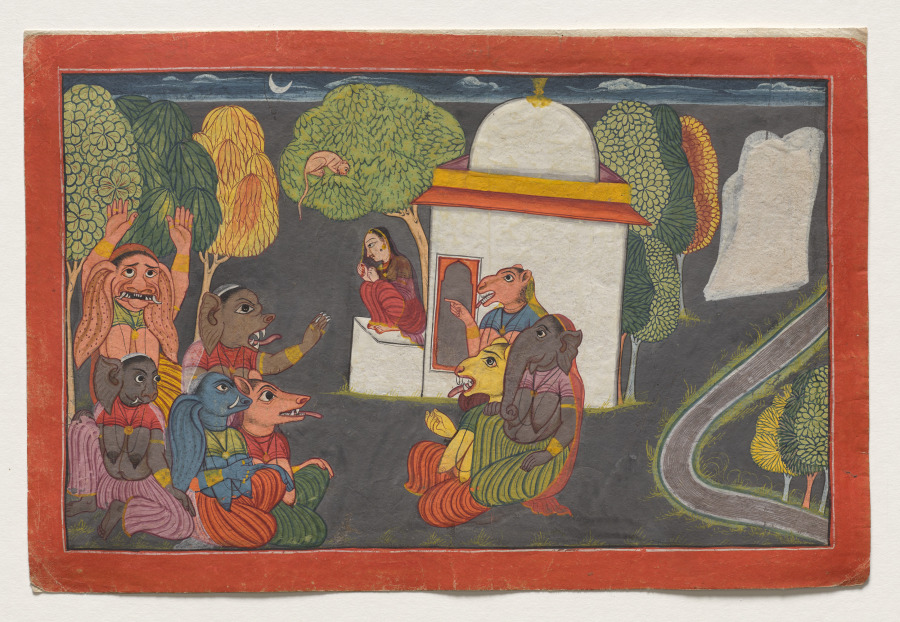
Hanuman spies Sita in the Ashoka Grove, from the “Shangri” Ramayana (c. 1700–25) is in the Cleveland Museum of Art collection.
The work and its context
The museum's open-access catalogue describes the work:
After her abduction, Sita is imprisoned in a garden on the island of Lanka. Female guards appointed by her captor, the demon Ravana, surround her and jeer as she crouches on a step. The monkey in the tree above her is the hero Hanuman, a loyal friend to her husband Rama. He shrank to disguise himself and gives her a message: now that he has found her, he will bring Rama and their armies to rescue her.
Object facts
- Title: Hanuman spies Sita in the Ashoka Grove, from the “Shangri” Ramayana
- Date: c. 1700–25
- Culture: Northern India, Pahari kingdoms, Himachal Pradesh
- Type: Painting
- Technique: Gum tempera and ink on paper
- Dimensions: Page: 21 x 31.6 cm (8 1/4 x 12 7/16 in.)
- Collection: Indian Art
- Department: Indian and Southeast Asian Art
- Accession number: 2025.8
A detail from the museum
The female guards have human bodies and fanciful animal heads.
Collection credit
Sundry Art - Miscellaneous Fund
View the collection record
See the museum's photographs and full catalogue entry. Catalogue text is reproduced from the Cleveland Museum of Art's open-access data, with HTML formatting removed. This object and its supplied image are designated CC0.
Sources
More in Lifestyle
Keep reading