Head of a Bodhisattva (75–early 100s CE): Art, History and Details
Head of a Bodhisattva at the Cleveland Museum of Art: 75–early 100s CE, red sandstone. Explore the work's context, creator attribution and collection history.
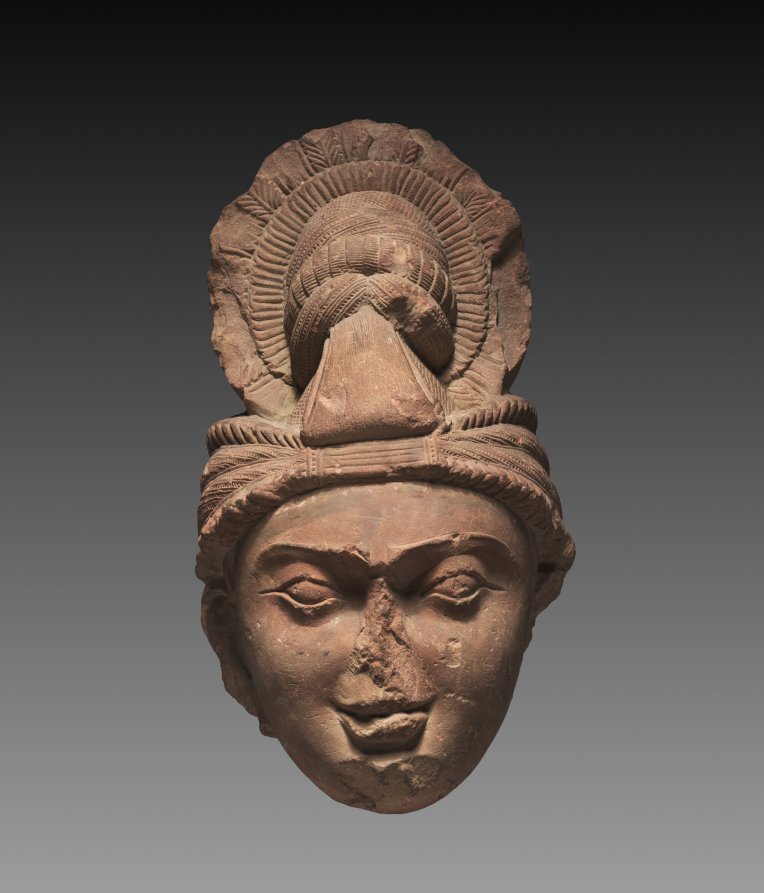
Head of a Bodhisattva (75–early 100s CE) is in the Cleveland Museum of Art collection.
The work and its context
The museum's open-access catalogue describes the work:
This monumental male head must have originally belonged to a larger-than-life Bodhisattva image. The imposing turban is of the type worn by royalty, divinities, and nobility during the Kushan period from the first through third century. The round, fleshy face, heightened by a subtle smile, retains the powerful quality of early Kushan and pre-Kushan images of nature divinities, known as yakshas.
Object facts
- Title: Head of a Bodhisattva
- Date: 75–early 100s CE
- Culture: India, Mathura, Kushan period
- Type: Sculpture
- Technique: red sandstone
- Dimensions: Overall: 50.8 x 25.4 cm (20 x 10 in.)
- Collection: Indian Art - Kushan, Mathura
- Department: Indian and Southeast Asian Art
- Accession number: 1984.220
Collection credit
Gift of Robert H. Ellsworth in memory of Christian Humann
Further reading listed by the museum
- Turner, Evan H. "The Year in Review for 1984." The Bulletin of the Cleveland Museum of Art 72, no. 2 (1985): 163-207.
- Pal, Pratapaditya. The Sensuous Immortals: A Selection of Sculptures from the Pan-Asian Collection. Los Angeles: Los Angeles County Museum of Art, 1977.
- Heeramaneck, Alice N. Masterpieces of Indian Sculpture: From the Former Collections of Nasli M. Heeramaneck, Introduction and Descriptive Catalogue. [Place of publication not identified]: A.N. Heeramaneck, 1979.
View the collection record
See the museum's photographs and full catalogue entry. Catalogue text is reproduced from the Cleveland Museum of Art's open-access data, with HTML formatting removed. This object and its supplied image are designated CC0.
Sources
More in Lifestyle
Keep reading