Head of Sekhmet (c. 1391–1353 BCE): Art, History and Details
Head of Sekhmet at the Cleveland Museum of Art: c. 1391–1353 BCE, granodiorite. Explore the work's context, creator attribution and collection history.
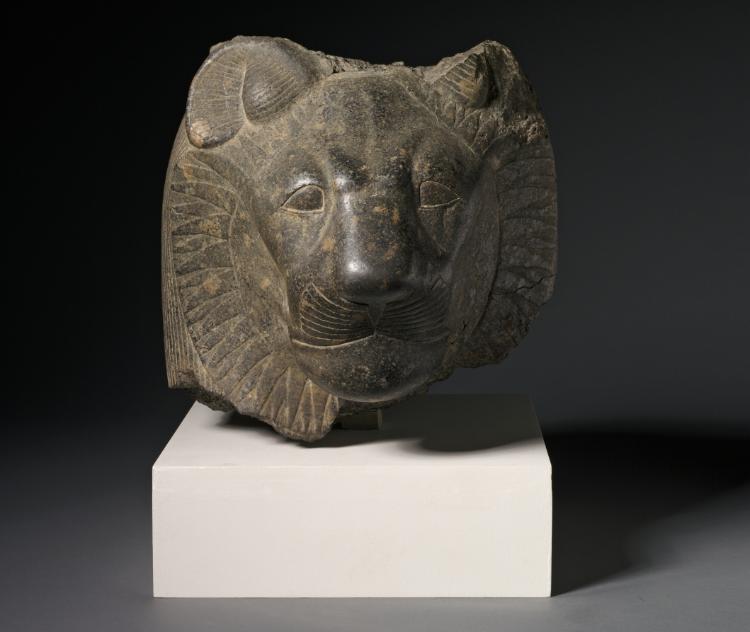
Head of Sekhmet (c. 1391–1353 BCE) is in the Cleveland Museum of Art collection.
The work and its context
The museum's open-access catalogue describes the work:
This lioness head once belonged to a grand statue of the goddess Sekhmet, "the powerful one," probably seated and wearing a tight dress. Possibly appealing to her healing aspect, Pharaoh Amenhotep III, often described as “beloved of Sekhmet,” commissioned and dedicated hundreds of large granodiorite Sekhmet sculptures in his Theban mortuary temple. Thus, this head likely comes from Thebes, perhaps later moved across the Nile—like many such sculptures—to the temple of Mut, a related deity, at Karnak. Behind her stylized ruff, Sekhmet wears a wig, once crowned with a sun disk and uraeus, the stylized cobra symbolizing royal or divine power.
Object facts
- Title: Head of Sekhmet
- Date: c. 1391–1353 BCE
- Culture: Egypt, Thebes(?), New Kingdom (1540–1069 BCE), Dynasty 18, reign of Amenhotep III (1390–1352 BCE)
- Type: Sculpture
- Technique: granodiorite
- Dimensions: Overall: 33.4 x 31.5 x 32 cm (13 1/8 x 12 3/8 x 12 5/8 in.)
- Collection: Egypt - New Kingdom
- Department: Egyptian and Ancient Near Eastern Art
- Accession number: 1916.2011
A detail from the museum
Amenhotep III may have dedicated 730 statues of Sekhmet, two for each day of the year.
Collection credit
Gift of the John Huntington Art and Polytechnic Trust
Further reading listed by the museum
- “Closing Days of the Inaugural Exhibition.” The Bulletin of the Cleveland Museum of Art 3, no. 3 (1916): 1–4. Fig. 23.
- "Current Exhibitions." The Bulletin of the Cleveland Museum of Art 4, no. 1 (1917): 4-8.
- "Accessions." The Bulletin of the Cleveland Museum of Art 4, no. 2 (1917): 26-37.
View the collection record
See the museum's photographs and full catalogue entry. Catalogue text is reproduced from the Cleveland Museum of Art's open-access data, with HTML formatting removed. This object and its supplied image are designated CC0.
Sources
More in Lifestyle
Keep reading