Headcloth (c. 600–400 BCE): Art, History and Details
Headcloth at the Cleveland Museum of Art: c. 600–400 BCE, embroidery on tabby cloth; needle reseau and fringe at border. Explore the work's context, creator attribution and collection history.
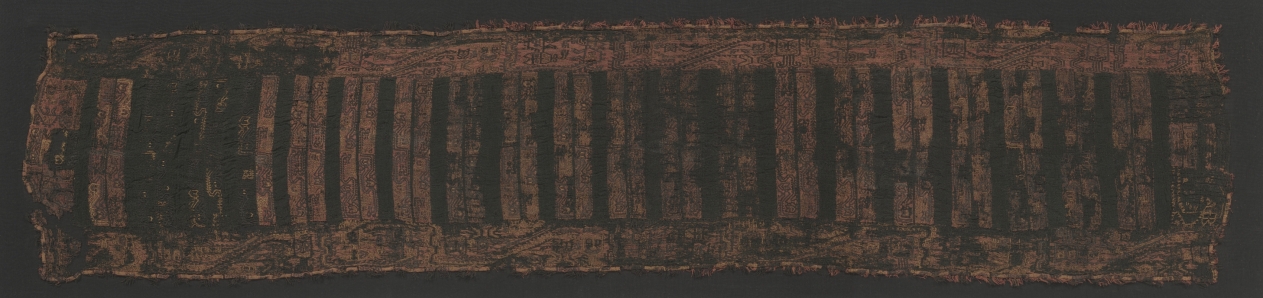
Headcloth (c. 600–400 BCE) is in the Cleveland Museum of Art collection.
The work and its context
The museum's open-access catalogue describes the work:
The embroidered design consists entirely of felines, some of which are depicted with trophy heads. Both are very common motifs of Paracas art. The linear and highly stylized design as well as the limited spectrum of colors are characteristic of Paracas embroideries from the Middle Period.
Object facts
- Title: Headcloth
- Date: c. 600–400 BCE
- Culture: Peru, South Coast, Paracas, Middle Period, c. 600-400 BC (Early Horizon, Epoch 10)
- Type: Textile
- Technique: embroidery on tabby cloth; needle reseau and fringe at border
- Dimensions: Overall: 40.7 x 182.9 cm (16 x 72 in.)
- Collection: T - Pre-Columbian
- Department: Textiles
- Accession number: 1940.529
A detail from the museum
Extremely dry conditions on Peru's desert coast allow for the extraordinary preservation of textiles.
Collection credit
The Norweb Collection
View the collection record
See the museum's photographs and full catalogue entry. Catalogue text is reproduced from the Cleveland Museum of Art's open-access data, with HTML formatting removed. This object and its supplied image are designated CC0.
Sources
More in Lifestyle
Keep reading