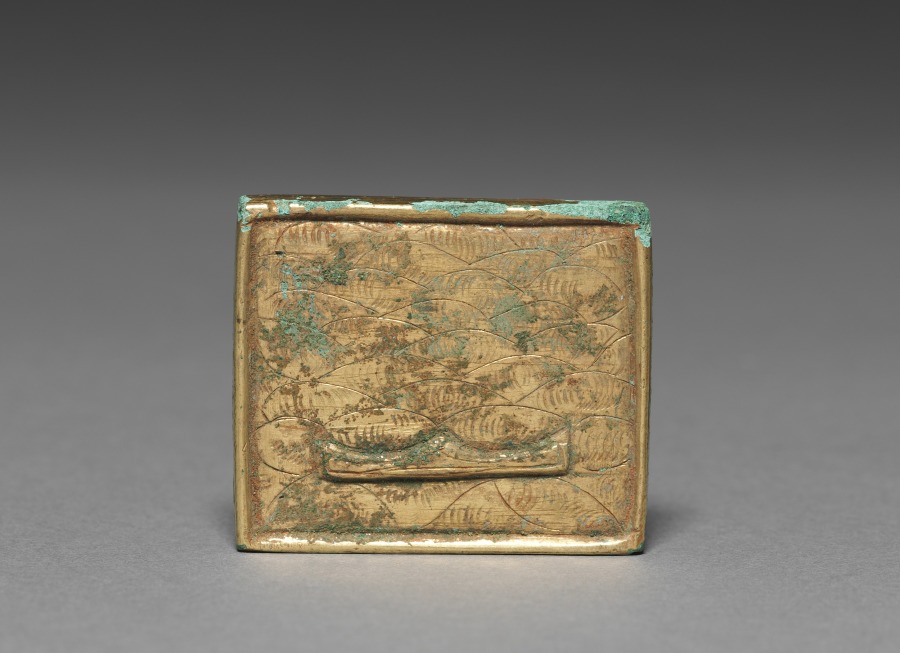
Headdress Ornament (c. 300 BCE–200 CE): Art, History and Details
Headdress Ornament at the Cleveland Museum of Art: c. 300 BCE–200 CE, hammered and embossed gold-copper alloy. Explore the work's context, creator attribution and collection history.
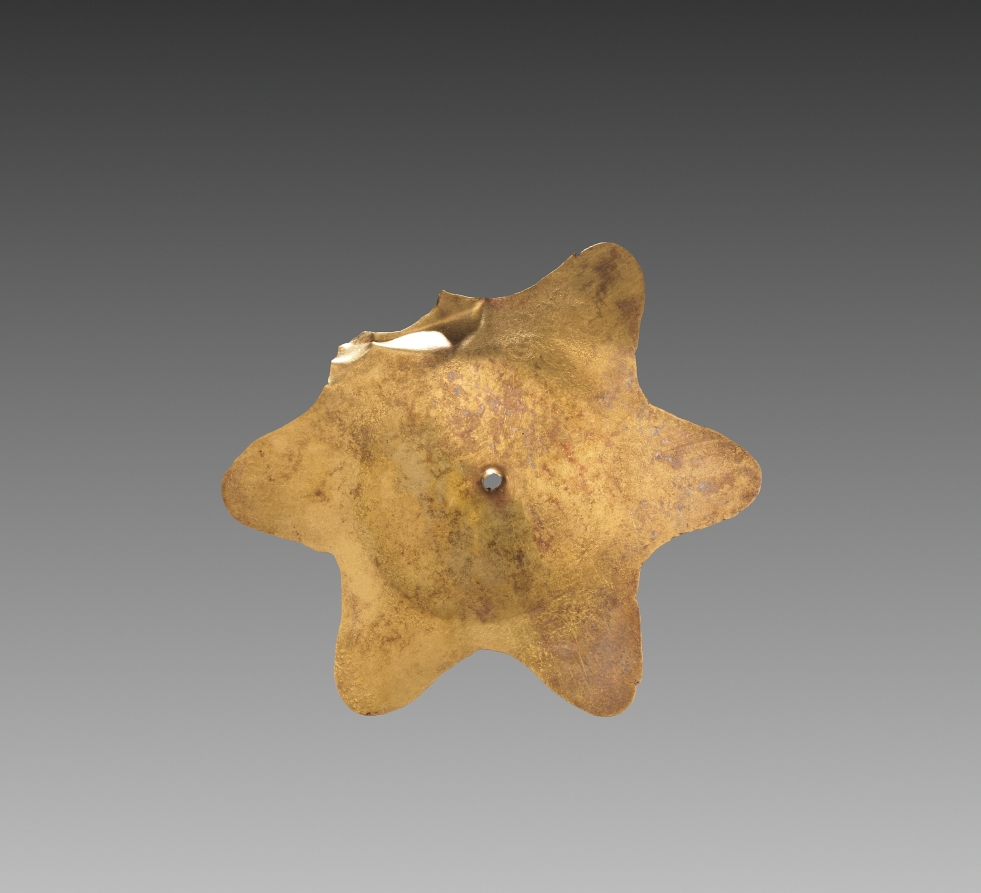
Headdress Ornament (c. 300 BCE–200 CE) is in the Cleveland Museum of Art collection.
The work and its context
The museum's open-access catalogue describes the work:
A similar star-shaped metal ornament is present on a human-hair wig from a mummy excavated at the Paracas Necropolis site. The wig has tresses wrapped with colored yarns, and a long headband wrapped many times around the head. The star-shaped ornament is attached to the headband, and a circular metal ornament is attached to the braid.
Object facts
- Title: Headdress Ornament
- Date: c. 300 BCE–200 CE
- Culture: Peru, South Coast, Paracas
- Type: Jewelry
- Technique: hammered and embossed gold-copper alloy
- Dimensions: Overall: 5.2 x 4.6 cm (2 1/16 x 1 13/16 in.)
- Collection: AA - Andes
- Department: Art of the Americas
- Accession number: 1940.510
A detail from the museum
Tumbaga is an alloy made by blending gold with copper, which may give the gold a rosy hue.
Collection credit
The Norweb Collection
View the collection record
See the museum's photographs and full catalogue entry. Catalogue text is reproduced from the Cleveland Museum of Art's open-access data, with HTML formatting removed. This object and its supplied image are designated CC0.
Sources
More in Lifestyle
Keep reading