Hecte: Head of Omphale (obverse); Incuse Square (reverse) (387–326 BCE): Art, History and Details
Hecte: Head of Omphale (obverse); Incuse Square (reverse) at the Cleveland Museum of Art: 387–326 BCE, electrum (gold-silver alloy). Explore the work's context, creator attribution and collection history.
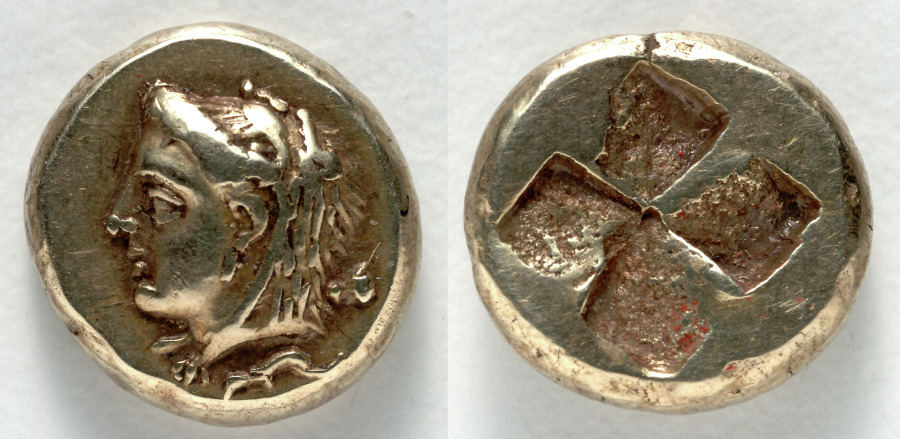
Hecte: Head of Omphale (obverse); Incuse Square (reverse) (387–326 BCE) is in the Cleveland Museum of Art collection.
The work and its context
The museum's open-access catalogue describes the work:
This very small electrum coin shows the Lydian queen Omphale on the obverse. She can be distinguished from Herakles, whose lion-skin she wears, by her earring. Also visible, over her shoulder, is the hero’s club, while beneath her swims a small seal—phôkê in Greek, a punning reference to Phokaia, where the coin was made. The reverse features a much simpler design, a quartered incuse square.
Object facts
- Title: Hecte: Head of Omphale (obverse); Incuse Square (reverse)
- Date: 387–326 BCE
- Culture: Greek, minted at Phokaia (Ionia)
- Type: Coins
- Technique: electrum (gold-silver alloy)
- Dimensions: Diameter: 0.9 cm (3/8 in.)
- Collection: GR - Greek
- Department: Greek and Roman Art
- Accession number: 1916.973
A detail from the museum
The Lydian queen Omphale wears the lion skin of Herakles, whom she enslaved.
Collection credit
Gift of J. H. Wade
View the collection record
See the museum's photographs and full catalogue entry. Catalogue text is reproduced from the Cleveland Museum of Art's open-access data, with HTML formatting removed. This object and its supplied image are designated CC0.
Sources
More in Lifestyle
Keep reading