Helmet (late 1800s–early 1900s): Art, History and Details
Helmet at the Cleveland Museum of Art: late 1800s–early 1900s, Wood and paint. Explore the work's context, creator attribution and collection history.
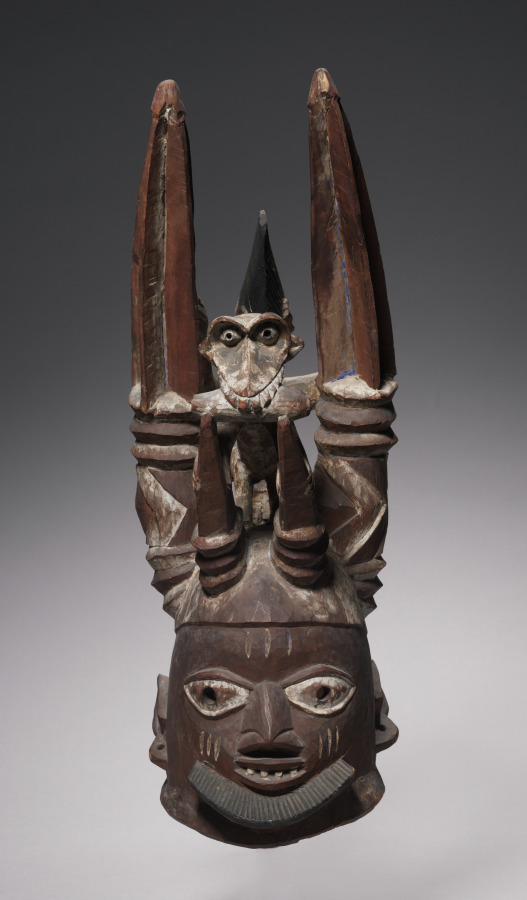
Helmet (late 1800s–early 1900s) is in the Cleveland Museum of Art collection.
The work and its context
The museum's open-access catalogue describes the work:
This type of helmet used by the Oro association, is often mistaken for the more common Egungun. While Egungun masquerades are performed to honor an individual's ancestors, Oro masquerades are performed in conjunction with the actual funeral of a Yoruba person. The Oro association is very secretive, and the visibility of helmets like this one is generally restricted. Oro is also responsible for carrying out criminal sentences, such as collecting fines, repossessing goods, and executing those convicted of a capital crime. The female figure suspended from the back of the horns may reference the victims of Oro executions. This work has been attributed to the Esubiyi School of Abeokuta, founded about 1860.
Object facts
- Title: Helmet
- Date: late 1800s–early 1900s
- Culture: Africa, West Africa, Nigeria, Yorùbá-style maker
- Type: Mask
- Technique: Wood and paint
- Dimensions: Overall: 62.9 cm (24 3/4 in.)
- Collection: African Art
- Department: African Art
- Accession number: 1969.5
Collection credit
Gift of Katherine C. White
Further reading listed by the museum
- Fagg, William, and Cleveland Museum of Art. 1968. African Tribal Images; the Katherine White Reswick Collection. Cleveland: Cleveland Museum of Art, no. 113.
- CMA 1970: "Year in Review 1969," CMA Bulletin LVII (Jan., 1970), p. 47, no. 135.
View the collection record
See the museum's photographs and full catalogue entry. Catalogue text is reproduced from the Cleveland Museum of Art's open-access data, with HTML formatting removed. This object and its supplied image are designated CC0.
Sources
More in Lifestyle
Keep reading