Helmet Mask (mid- to late 1800s): Art, History and Details
Helmet Mask at the Cleveland Museum of Art: mid- to late 1800s, Wood and probably resin. Explore the work's context, creator attribution and collection history.
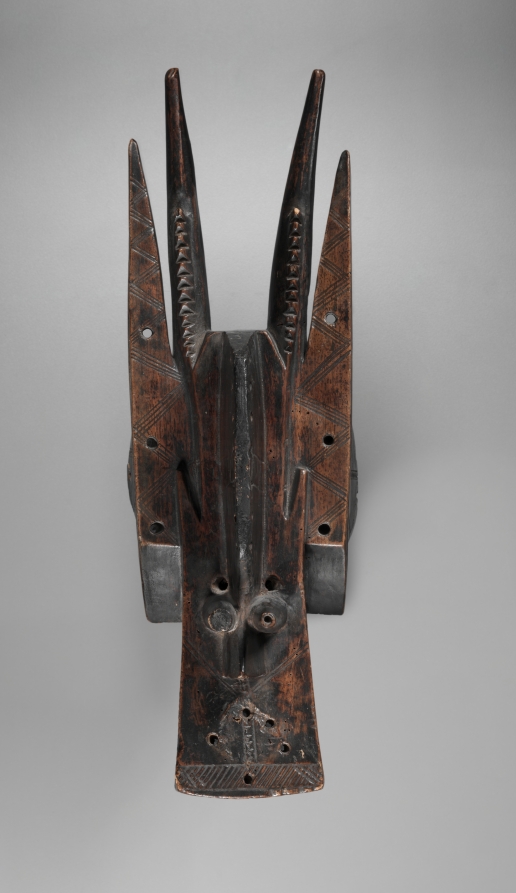
Helmet Mask (mid- to late 1800s) is in the Cleveland Museum of Art collection.
The work and its context
The museum's open-access catalogue describes the work:
Combining animal and human traits, this example of a genre of mask called suruku, meaning “hyena,” most likely belonged to the Korè, one of six power associations that the Malinke would have adopted from their Bamana neighbors. The Korè is concerned with the circumcision and initiation of male youths into adulthood. The mask probably served as one of the symbols of the different Korè classes.
Object facts
- Title: Helmet Mask
- Date: mid- to late 1800s
- Culture: Africa, West Africa, Mali, Malinke-style blacksmith-carver
- Type: Mask
- Technique: Wood and probably resin
- Dimensions: Overall: 47 cm (18 1/2 in.)
- Collection: African Art
- Department: African Art
- Accession number: 2004.84
A detail from the museum
Holes along the top ridge of this mask once held a crest made of cane, red fibers, and cowrie shells.
Collection credit
Andrew R. and Martha Holden Jennings Fund
Further reading listed by the museum
- Petridis, Constantine. "New Acquisitions of African Art at the Cleveland Museum of Art". African Arts. (44) No. 1, Spring 2011. Pg. 55, Fig. 3.
- Petridis, Constantine, "Celebrating Bamanaya", Cleveland Museum of Art. Cleveland Art: The Cleveland Museum of Art Members Magazine. Vol. 46 no. 02, February 2006
- Cleveland Museum of Art. The CMA Companion: A Guide to the Cleveland Museum of Art. Cleveland: Cleveland Museum of Art, 2014.
View the collection record
See the museum's photographs and full catalogue entry. Catalogue text is reproduced from the Cleveland Museum of Art's open-access data, with HTML formatting removed. This object and its supplied image are designated CC0.
Sources
More in Lifestyle
Keep reading