Hercules (c. 30 BCE–20 CE): Art, History and Details
Hercules at the Cleveland Museum of Art: c. 30 BCE–20 CE, bronze with silver and copper inlays. Explore the work's context, creator attribution and collection history.
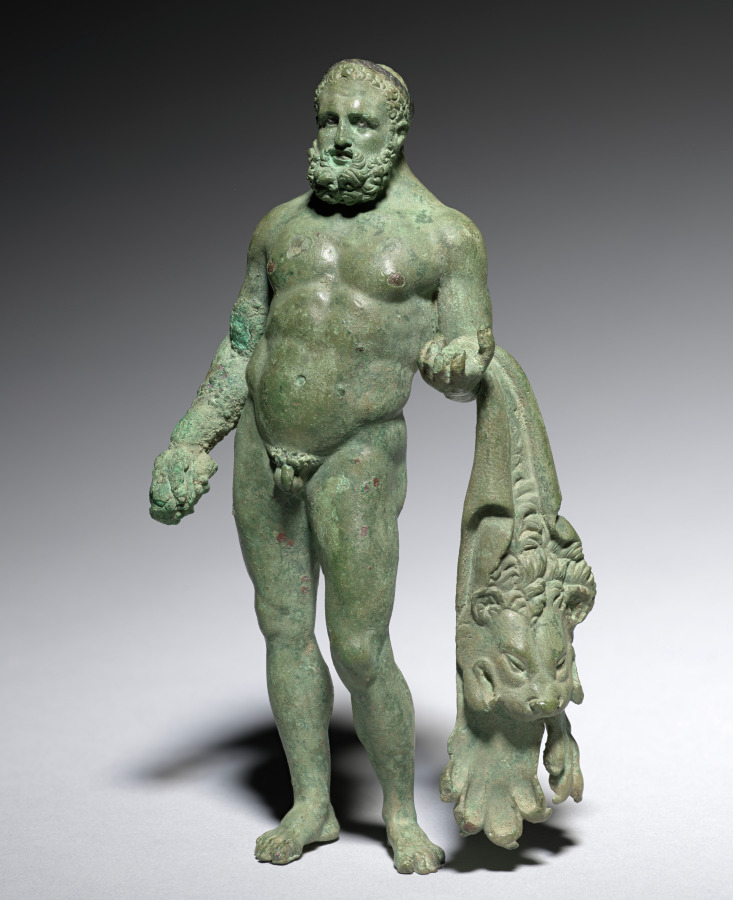
Hercules (c. 30 BCE–20 CE) is in the Cleveland Museum of Art collection.
The work and its context
The museum's open-access catalogue describes the work:
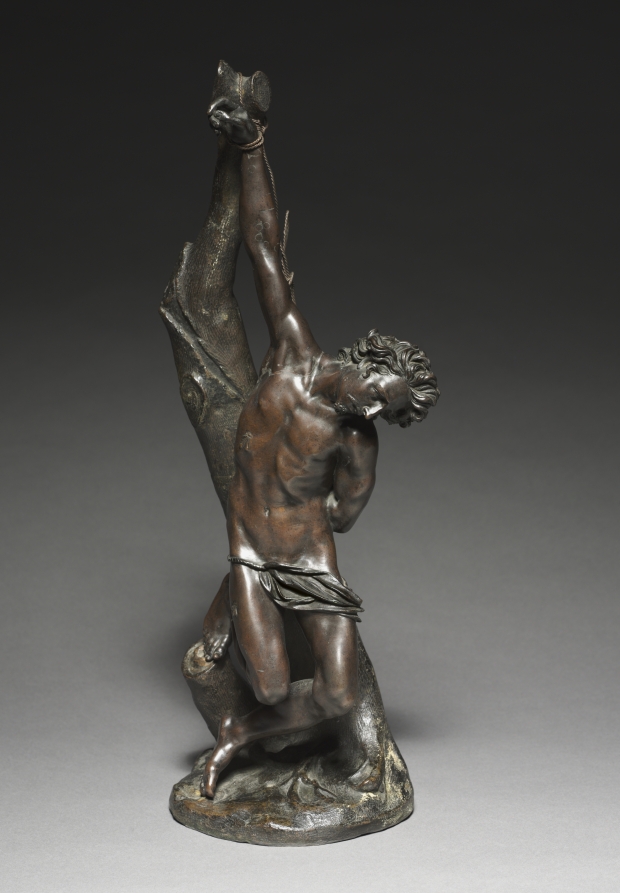
This bronze statuette is a nude figure of the hero Hercules. He stands in a contrapposto pose, with the majority of his weight on one leg. Over his left arm, Hercules holds the skin of the Nemean Lion, having slayed the beast as part of his Twelve Labors and now carrying the pelt as a trophy. Although now mostly lost, Hercules once held his signature wooden club in his right hand. Roman artists often portrayed Hercules as middle-aged, as though greater maturity would increase his power and virility.
Object facts
- Title: Hercules
- Date: c. 30 BCE–20 CE
- Culture: Italy, Rome, Early Imperial period
- Type: Sculpture
- Technique: bronze with silver and copper inlays
- Dimensions: Overall: 14.5 x 8 cm (5 11/16 x 3 1/8 in.)
- Collection: GR - Roman
- Department: Greek and Roman Art
- Accession number: 1987.2
A detail from the museum
Hercules is the Roman name for the classical hero known in Greek as Herakles.
Collection credit
Purchase from the J. H. Wade Fund
Further reading listed by the museum
- Kozloff, Arielle P., David Gordon Mitten, et al. The Gods Delight: The Human Figure in Classical Bronze. Cleveland, Ohio: Published by the Cleveland Museum of Art in cooperation with Indiana University Press, 1988.
- Poster and Invitation, Basel Fair, 1985.
- Warner, Marina "Antiques: Gods and Goddesses", Architectural Digest, Vol. 43 (October 1986).
View the collection record
See the museum's photographs and full catalogue entry. Catalogue text is reproduced from the Cleveland Museum of Art's open-access data, with HTML formatting removed. This object and its supplied image are designated CC0.
Sources
More in Lifestyle
Keep reading
Related stories