Hinggi (early 1900s): Art, History and Details
Hinggi at the Cleveland Museum of Art: early 1900s, cotton, ikat dyed. Explore the work's context, creator attribution and collection history.
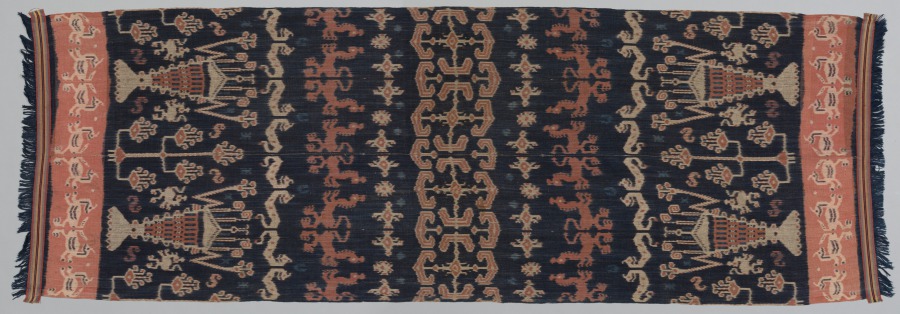
Hinggi (early 1900s) is in the Cleveland Museum of Art collection.
The work and its context
The museum's open-access catalogue describes the work:
Each hinggi consists of two panels stitched together down the center and often, as in this mantle, finished at either end with a band woven with supplementary warps. The geometric motif repeated across the center of this hinggi is a symbol of royalty; the rampant lions, borrowed originally from European coats-of-arms, designate royal power; the large marine shrimp signify longevity, while the Trees of Life between the shrimp symbolize fertility; and the paired deer in red bands at either end are emblems of royal privilege since the hunting of deer was, traditionally, the prerogative of the king.
Object facts
- Title: Hinggi
- Date: early 1900s
- Culture: Indonesia, Sumba, early 20th century
- Type: Textile
- Technique: cotton, ikat dyed
- Dimensions: Overall: 258.4 x 87 cm (101 3/4 x 34 1/4 in.)
- Collection: Textiles
- Department: Textiles
- Accession number: 1980.199
Collection credit
Mary Cunningham Memorial Fund
View the collection record
See the museum's photographs and full catalogue entry. Catalogue text is reproduced from the Cleveland Museum of Art's open-access data, with HTML formatting removed. This object and its supplied image are designated CC0.
Sources
More in Lifestyle
Keep reading
Related stories