Hitching Post (1200s): Art, History and Details
Hitching Post at the Cleveland Museum of Art: 1200s, limestone. Explore the work's context, creator attribution and collection history.
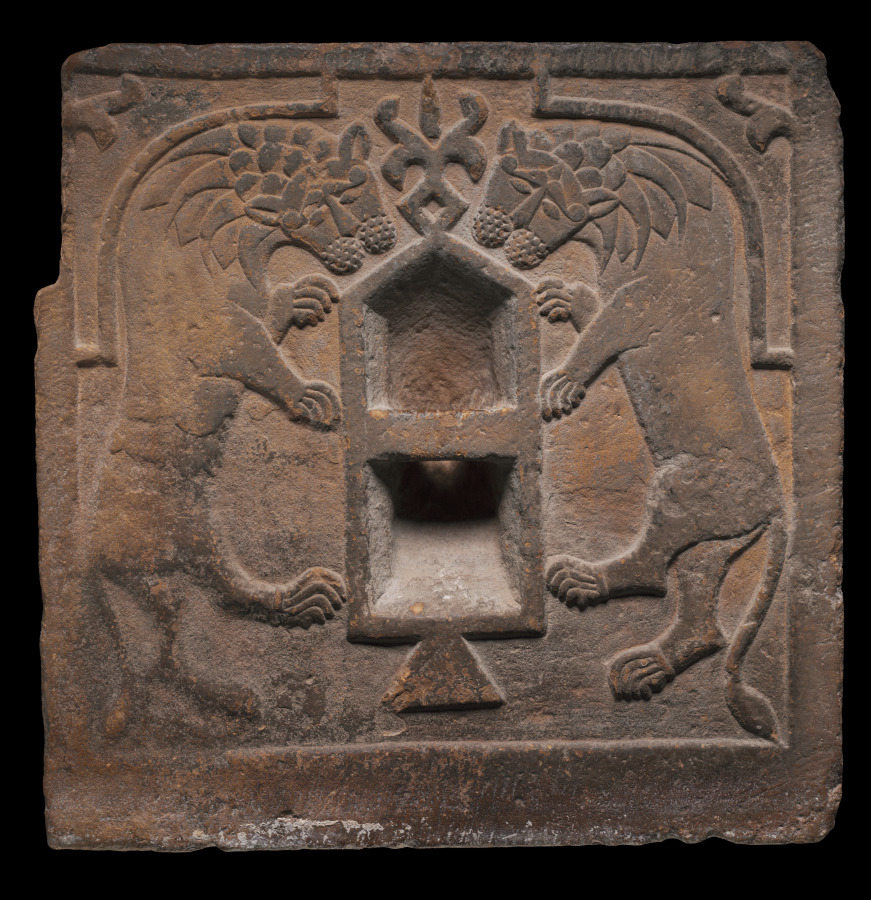
Hitching Post (1200s) is in the Cleveland Museum of Art collection.
The work and its context
The museum's open-access catalogue describes the work:
Two powerful lions appear to guard the central hitching ledge to which travelers and merchants could secure their horses and other animals, possibly at a caravanserai, predecessor of the modern motel, located along trade routes such as the Silk Road. Animals and human figures are often represented in art made in Islamic countries, but they are not portrayed on items associated with the Muslim faith—the Qur'an, mosques, and prayer rugs.
Object facts
- Title: Hitching Post
- Date: 1200s
- Culture: Iran, possibly Hamadan
- Type: Sculpture
- Technique: limestone
- Dimensions: Overall: 62.9 x 65.8 cm (24 3/4 x 25 7/8 in.)
- Collection: Islamic Art
- Department: Islamic Art
- Accession number: 1944.481
Collection credit
Purchase from the J. H. Wade Fund
Further reading listed by the museum
- Ettinghausen, Richard. ""Six Thousand Years of Persian Art" the Exhibition of Iranian Art New York, 1940." Ars Islamica 7, no. 1 (1940): 106–117.
- Islamic Art: Selected Examples from the Loan Exhibition of Islamic Art at the Cleveland Museum of Art. [Cleveland]: The Cleveland Museum of Art, 1944.
- The Cleveland Museum of Art. The Cleveland Museum of Art Handbook. Cleveland, OH: The Cleveland Museum of Art, 1958.
View the collection record
See the museum's photographs and full catalogue entry. Catalogue text is reproduced from the Cleveland Museum of Art's open-access data, with HTML formatting removed. This object and its supplied image are designated CC0.
Sources
More in Lifestyle
Keep reading