Horse (1600s): Art, History and Details
Horse at the Cleveland Museum of Art: 1600s, jade. Explore the work's context, creator attribution and collection history.
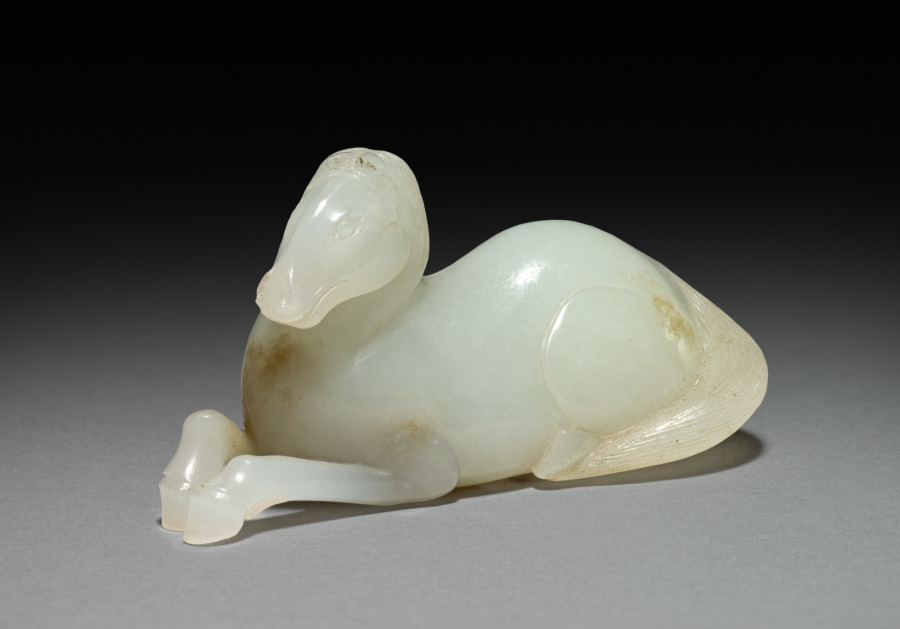
Horse (1600s) is in the Cleveland Museum of Art collection.
The work and its context
The museum's open-access catalogue describes the work:
In China, access to political power was granted to those who passed the civil service examinations, a system that offered official service only at a high level of education. Chinese literati-officials whose daily routine was administrative work in an office, enjoyed precious objects on their writing desks that offered distraction and demonstrated good taste. By the Ming (1368–1644) and Qing (1644–1911) dynasties, these utensils of the literati studio became also collectibles and were treasured as artworks. Desk objects included paper weights; seals and seal paste boxes; brush rests, wrist rests and brush holders; water droppers, ink cakes, miniature mountains, and albums, all ranging in material from jade, gilt bronze, lacquer, and wood to porcelain.
Object facts
- Title: Horse
- Date: 1600s
- Culture: China, Qing dynasty (1644-1911)
- Type: Jade
- Technique: jade
- Dimensions: Overall: 3.4 cm (1 5/16 in.)
- Collection: China - Qing Dynasty
- Department: Chinese Art
- Accession number: 1952.480
A detail from the museum
The white jade surface of the horse has been brightly polished, but portions of the original stone's "skin" remain on the base and below the head.
Collection credit
Anonymous Gift
Further reading listed by the museum
- Lee, Sherman E. “Chinese Carved Jades.” The Bulletin of the Cleveland Museum of Art 41, no. 4 (April 1954): 67–71.
View the collection record
See the museum's photographs and full catalogue entry. Catalogue text is reproduced from the Cleveland Museum of Art's open-access data, with HTML formatting removed. This object and its supplied image are designated CC0.
Sources
More in Lifestyle
Keep reading