Horse Bit with Winged Ibex Cheekpieces (800–600 BCE): Art, History and Details
Horse Bit with Winged Ibex Cheekpieces at the Cleveland Museum of Art: 800–600 BCE, bronze, cast and incised. Explore the work's context, creator attribution and collection history.
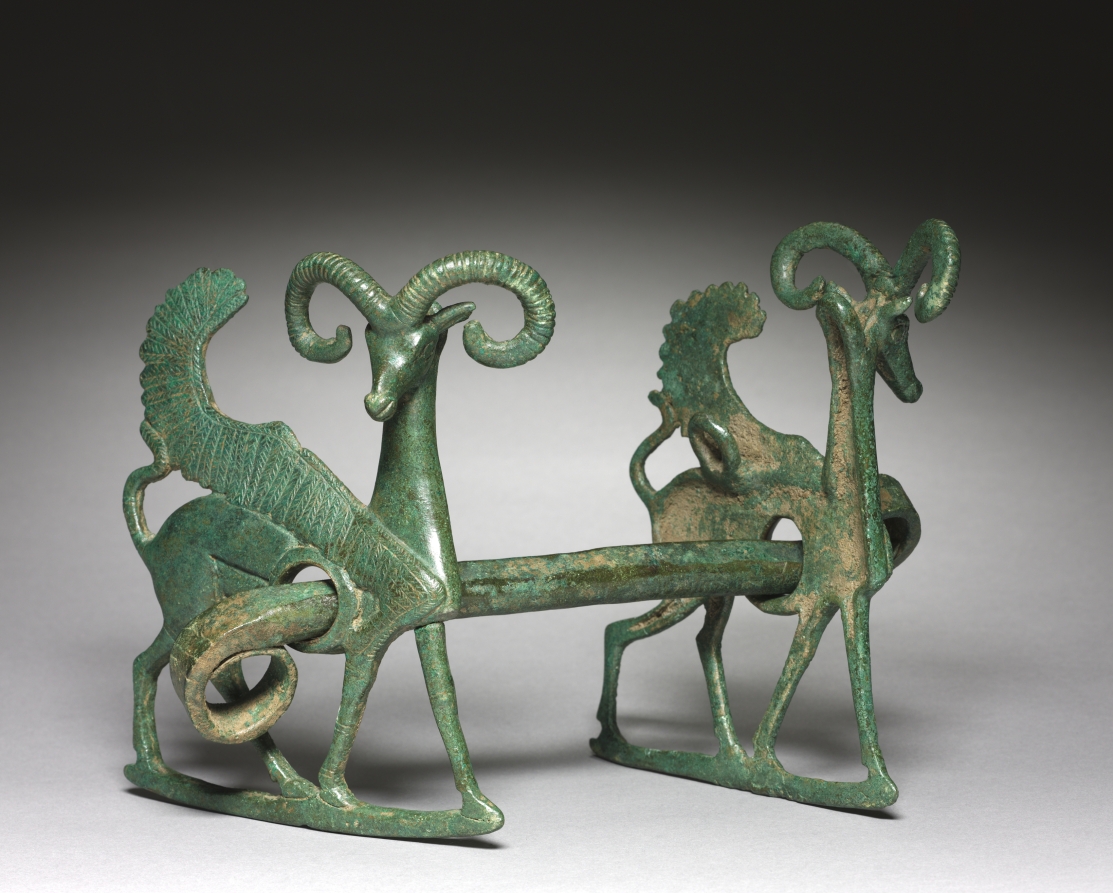
Horse Bit with Winged Ibex Cheekpieces (800–600 BCE) is in the Cleveland Museum of Art collection.
The work and its context
The museum's open-access catalogue describes the work:
This cast bronze horse bit joins two cheekpieces in the form of winged ibexes striding forward with turned heads. Incised lines decorate their curved horns and feathered wings. Rings penetrating their bodies hold the metal bit, while smaller rings on the hollow, unworked inner sides (behind the heads and hindquarters) may have held straps to secure the bit over the horse’s face. This work is said to be from Luristan, a region in western Iran known for its creation of bronze weapons, horse trappings, and standards in the Iron Age.
Object facts
- Title: Horse Bit with Winged Ibex Cheekpieces
- Date: 800–600 BCE
- Culture: Iran, Luristan
- Type: Sculpture
- Technique: bronze, cast and incised
- Dimensions: Overall: 23.6 cm (9 5/16 in.)
- Collection: Near Eastern Art
- Department: Egyptian and Ancient Near Eastern Art
- Accession number: 1980.102
A detail from the museum
Fantastical creatures such as winged ibexes and sphinxes often appear in Luristan bronzes.
Collection credit
Purchase from the J. H. Wade Fund
Further reading listed by the museum
- Lee, Sherman E. “The Year in Review for 1980.” The Bulletin of the Cleveland Museum of Art 68, no. 6 (June 1981): 163–219.
- The Cleveland Museum of Art. Handbook of the Cleveland Museum of Art. Cleveland, OH: The Cleveland Museum of Art, 1991.
View the collection record
See the museum's photographs and full catalogue entry. Catalogue text is reproduced from the Cleveland Museum of Art's open-access data, with HTML formatting removed. This object and its supplied image are designated CC0.
Sources
More in Lifestyle
Keep reading