Hydria (425–400 BCE): Art, History and Details
Hydria at the Cleveland Museum of Art: 425–400 BCE, bronze. Explore the work's context, creator attribution and collection history.
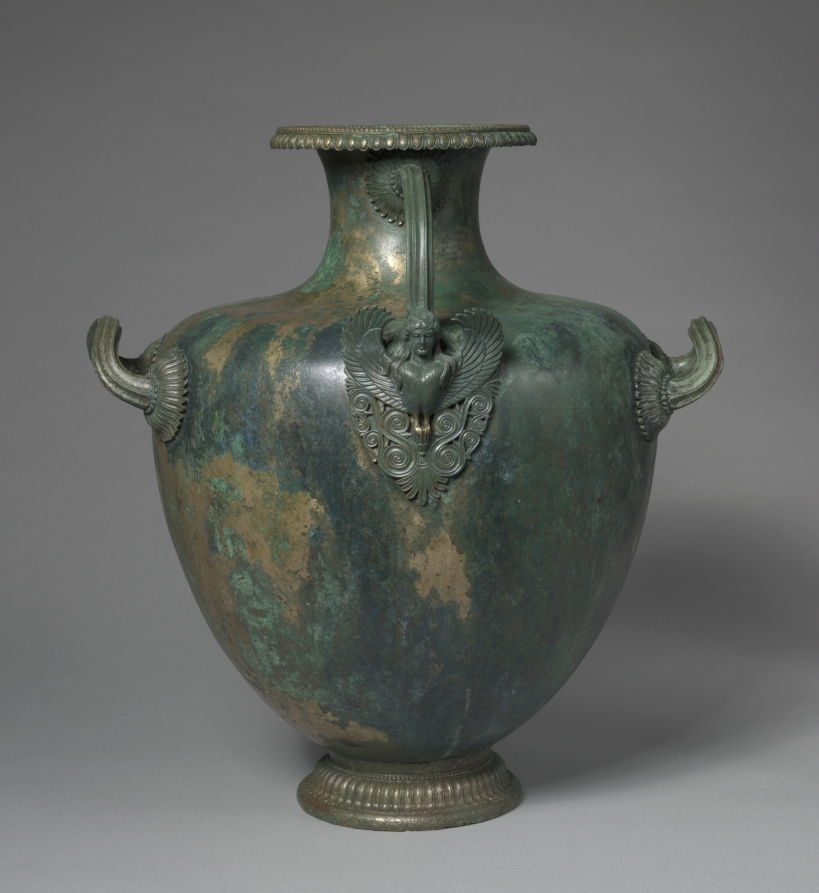
Hydria (425–400 BCE) is in the Cleveland Museum of Art collection.
The work and its context
The museum's open-access catalogue describes the work:
This vessel gets its name from a shape of earthenware jar that was used to carry water. This bronze hydria was probably used not to carry water but as a cinerary urn (kalpis). The figure on the handle is the mythological siren, a human-headed bird.
Object facts
- Title: Hydria
- Date: 425–400 BCE
- Culture: Greece
- Type: Metalwork
- Technique: bronze
- Dimensions: Overall: 41.6 x 38.4 cm (16 3/8 x 15 1/8 in.)
- Collection: GR - Greek
- Department: Greek and Roman Art
- Accession number: 1986.23
A detail from the museum
This bronze vessel was likely used as a funerary urn.
Collection credit
John L. Severance Fund
Further reading listed by the museum
- Turner, Evan H. “The Year in Review for 1986.” The Bulletin of the Cleveland Museum of Art 74, no. 2 (February 1987): 38–79.
- The Cleveland Museum of Art. Handbook of the Cleveland Museum of Art. Cleveland, OH: The Cleveland Museum of Art, 1991.
- Brody, Lisa R., Matthew Hargraves, and James Arnold Higginbotham. Figures from the Fire: J. Pierpont Morgan's Ancient Bronzes at the Wadsworth Atheneum Museum of Art. Wadsworth Athenaeum Museum of Art, Hartford, CT in association with Paul Holberton Publishing, London. 2023.
View the collection record
See the museum's photographs and full catalogue entry. Catalogue text is reproduced from the Cleveland Museum of Art's open-access data, with HTML formatting removed. This object and its supplied image are designated CC0.
Sources
More in Lifestyle
Keep reading