Ibex Standard Finial (c. 700–600 BCE): Art, History and Details
Ibex Standard Finial at the Cleveland Museum of Art: c. 700–600 BCE, bronze. Explore the work's context, creator attribution and collection history.
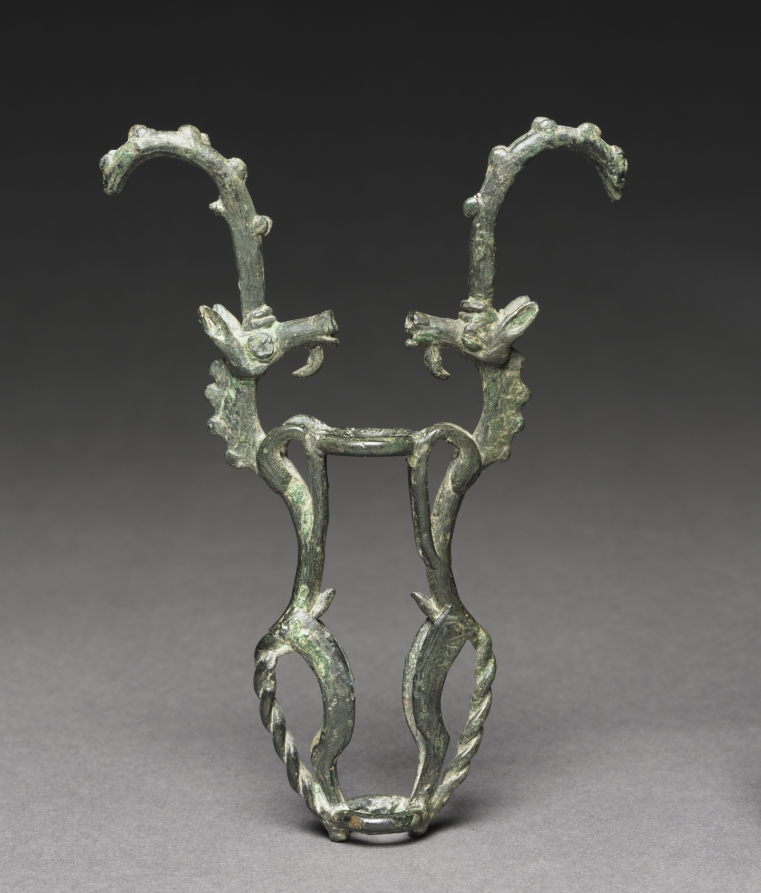
Ibex Standard Finial (c. 700–600 BCE) is in the Cleveland Museum of Art collection.
The work and its context
The museum's open-access catalogue describes the work:
This standard finial, a decorative tube perhaps used as a military emblem, is made of two abstracted ibexes. Their elongated forelegs form a ring where a pole may have once been inserted. An additional horizontal bar extends from their chests to support the ring. The cast bronze ibexes are decorated with ridged horns, curled beards, and twisted tails. Their hind legs join another ring. This standard is likely from Luristan, home to a seminomadic people who created a strong metalworking industry in the Iron Age.
Object facts
- Title: Ibex Standard Finial
- Date: c. 700–600 BCE
- Culture: Iran, Luristan
- Type: Sculpture
- Technique: bronze
- Dimensions: Overall: 13.5 x 9.7 x 1.9 cm (5 5/16 x 3 13/16 x 3/4 in.)
- Collection: Near Eastern Art
- Department: Egyptian and Ancient Near Eastern Art
- Accession number: 1992.246
A detail from the museum
Ibexes are wild goats from the Zagros Mountains of Iran and the Caucasus.
Collection credit
Seventy-fifth anniversary gift of Clara Taplin Rankin
Further reading listed by the museum
- Turner, Evan H. "The Year in Review for 1992." The Bulletin of the Cleveland Museum of Art 80, no. 2 (1993): 38-79.
View the collection record
See the museum's photographs and full catalogue entry. Catalogue text is reproduced from the Cleveland Museum of Art's open-access data, with HTML formatting removed. This object and its supplied image are designated CC0.
Sources
More in Lifestyle
Keep reading