Incense Box: Seto Ware (1200s–1300s): Art, History and Details
Incense Box: Seto Ware at the Cleveland Museum of Art: 1200s–1300s, glazed stoneware. Explore the work's context, creator attribution and collection history.
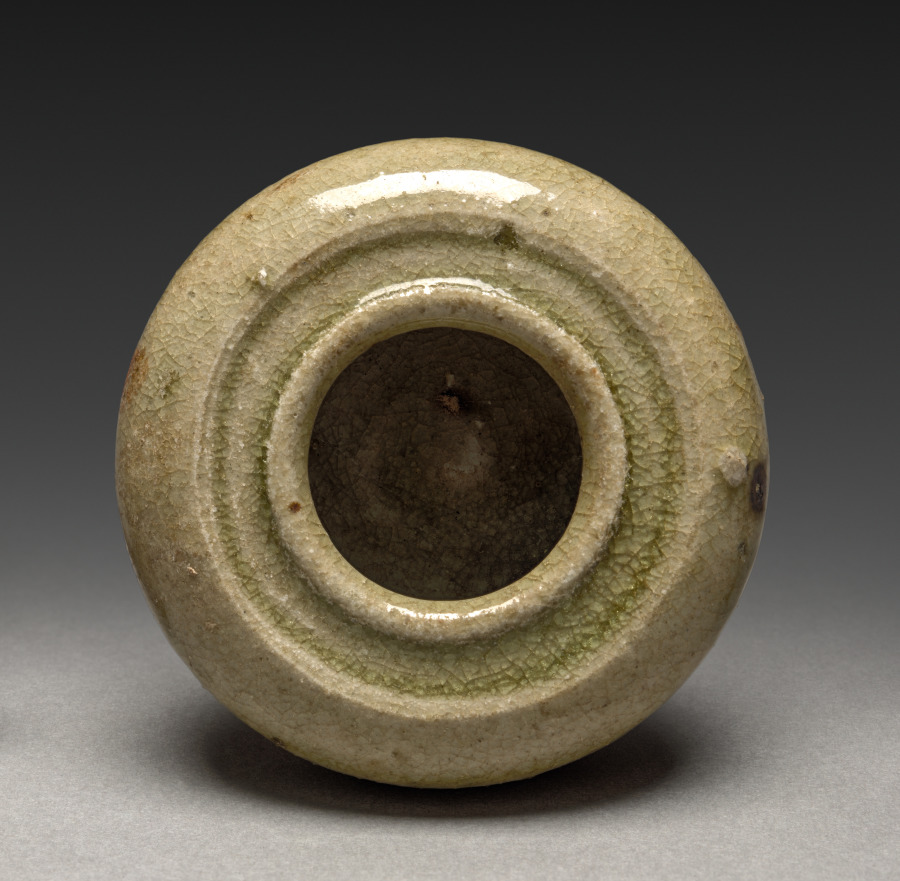
Incense Box: Seto Ware (1200s–1300s) is in the Cleveland Museum of Art collection.
The work and its context
The museum's open-access catalogue describes the work:
Old Seto, also called Koseto ware, was typically coated with an ash glaze in the mineral feldspar, which produced a yellow or grayish-green glaze. This palette appealed to medieval Buddhist priests and samurai alike. The practice of burning incense in religious, court, and domestic settings dates from the early 700s in Japan.
Object facts
- Title: Incense Box: Seto Ware
- Date: 1200s–1300s
- Culture: Japan, Kamakura period (1185–1333)
- Type: Ceramic
- Technique: glazed stoneware
- Dimensions: Diameter: 6 cm (2 3/8 in.); Overall: 3.5 cm (1 3/8 in.)
- Collection: Japanese Art
- Department: Japanese Art
- Accession number: 1975.170.a
Collection credit
Gift of Dr. and Mrs. Sherman E. Lee
View the collection record
See the museum's photographs and full catalogue entry. Catalogue text is reproduced from the Cleveland Museum of Art's open-access data, with HTML formatting removed. This object and its supplied image are designated CC0.
Sources
More in Lifestyle
Keep reading