Inkstand (1800s): Art, History and Details
Inkstand at the Cleveland Museum of Art: 1800s, Gold, silver, and enamel. Explore the work's context, creator attribution and collection history.
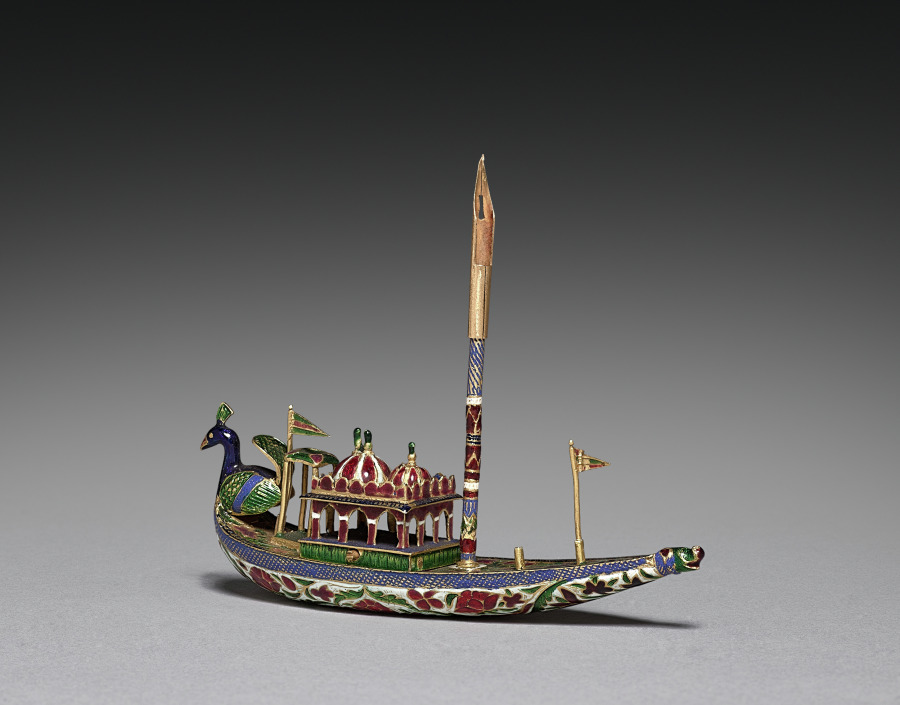
Inkstand (1800s) is in the Cleveland Museum of Art collection.
The work and its context
The museum's open-access catalogue describes the work:
This enamel inkstand takes the fanciful form of a pleasure boat, linking the composing of poetry and the writing of calligraphy to the amusement of the senses. The luxurious materials and elegant form also indicate that scribal activities require a certain level of refinement. Cleverly, the enamelist placed a lotus design on the bottom of the vessel; as a flower that floats on water, the bloom represents both the water imaginatively splashing against the underside of the boat and the actual ink swishing inside the bilge. This inkstand was purchased by Cleveland Museum of Art founder Jeptha Homer Wade II (1857–1926) and his wife Ellen Garretson Wade (1857–1917) as they made a tour of India on their own pleasure boat, the Wadena.
Object facts
- Title: Inkstand
- Date: 1800s
- Culture: Northwestern India, Rajasthan, Jaipur
- Type: Jewelry
- Technique: Gold, silver, and enamel
- Dimensions: Overall: 8.3 cm (3 1/4 in.)
- Collection: Indian Art
- Department: Indian and Southeast Asian Art
- Accession number: 1916.439
A detail from the museum
The silver core of this inkwell has been covered in gold leaf.
Collection credit
Gift of Mr. and Mrs. J. H. Wade
View the collection record
See the museum's photographs and full catalogue entry. Catalogue text is reproduced from the Cleveland Museum of Art's open-access data, with HTML formatting removed. This object and its supplied image are designated CC0.
Sources
More in Lifestyle
Keep reading