Inlay for a Mirror or Box: shih-shih (c. 900–1000): Art, History and Details
Inlay for a Mirror or Box: shih-shih at the Cleveland Museum of Art: c. 900–1000, beaten silver with chased details. Explore the work's context, creator attribution and collection history.
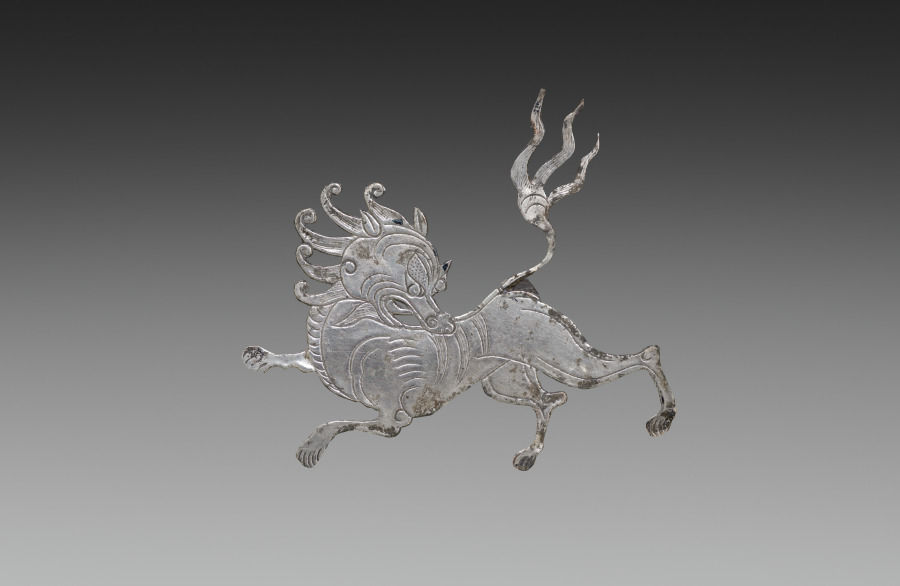
Inlay for a Mirror or Box: shih-shih (c. 900–1000) is in the Cleveland Museum of Art collection.
The work and its context
The museum's open-access catalogue describes the work:
The p'ing-t'o technique of inlaying gold and silver foil on lacquer produced luxurious articles of elegance and fragility. These stray silver inlays were originally mounted on a mirror back or a cosmetic box whose lacquered surface has disintegrated. They combine auspicious symbols of Indian and Chinese origin--human-headed birds whose melodies filled the Buddhist paradise, and bird-riding deities who inhabited the skies of Taoist mythology. Like these imaginary beings, the lions were probably paired in a radial design; at least one has been lost.
Object facts
- Title: Inlay for a Mirror or Box: shih-shih
- Date: c. 900–1000
- Culture: China, Tang dynasty (618-907) - Song dynasty (960-1279)
- Type: Metalwork
- Technique: beaten silver with chased details
- Dimensions: Overall: 5.2 x 5.6 cm (2 1/16 x 2 3/16 in.)
- Collection: China - Tang Dynasty
- Department: Chinese Art
- Accession number: 1969.78.3
Collection credit
Gift of Eugene Victor Thaw
View the collection record
See the museum's photographs and full catalogue entry. Catalogue text is reproduced from the Cleveland Museum of Art's open-access data, with HTML formatting removed. This object and its supplied image are designated CC0.
Sources
More in Lifestyle
Keep reading