Inro (Case) with Mice and Beans (late 1800s): Art, History and Details
Inro (Case) with Mice and Beans at the Cleveland Museum of Art: late 1800s, Lacquer on wood with color and sprinkled gold powder design (maki-e). Explore the work's context, creator attribution and collection history.
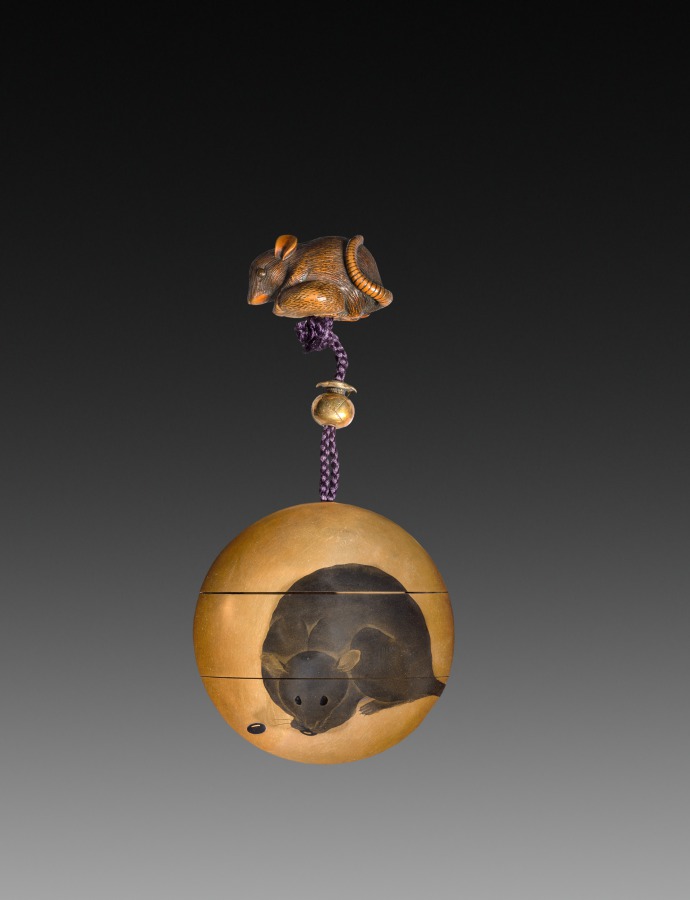
Inro (Case) with Mice and Beans (late 1800s) is in the Cleveland Museum of Art collection.
The work and its context
The museum's open-access catalogue describes the work:
This round inro is decorated with an image of a single mouse feasting on beans. The theme is elaborated with a metal ojime (cinch) in the form of a cloth bag tied with rope—suggesting the food stores the mouse is raiding. The carved wood netsuke, or toggle, is in the shape of a mouse clutching a nut.
Object facts
- Title: Inro (Case) with Mice and Beans
- Date: late 1800s
- Culture: Japan, Meiji period (1868–1912)
- Type: Lacquer
- Technique: Lacquer on wood with color and sprinkled gold powder design (maki-e)
- Dimensions: Diameter: 8.4 cm (3 5/16 in.)
- Collection: Japanese Art
- Department: Japanese Art
- Accession number: 1916.885
Collection credit
Gift of D. Z. Norton
View the collection record
See the museum's photographs and full catalogue entry. Catalogue text is reproduced from the Cleveland Museum of Art's open-access data, with HTML formatting removed. This object and its supplied image are designated CC0.
Sources
More in Lifestyle
Keep reading


