Inscription Plaque, Possibly from a Door (c. 1693): Art, History and Details
Inscription Plaque, Possibly from a Door at the Cleveland Museum of Art: c. 1693, forged steel, cut to shape and pierced. Explore the work's context, creator attribution and collection history.
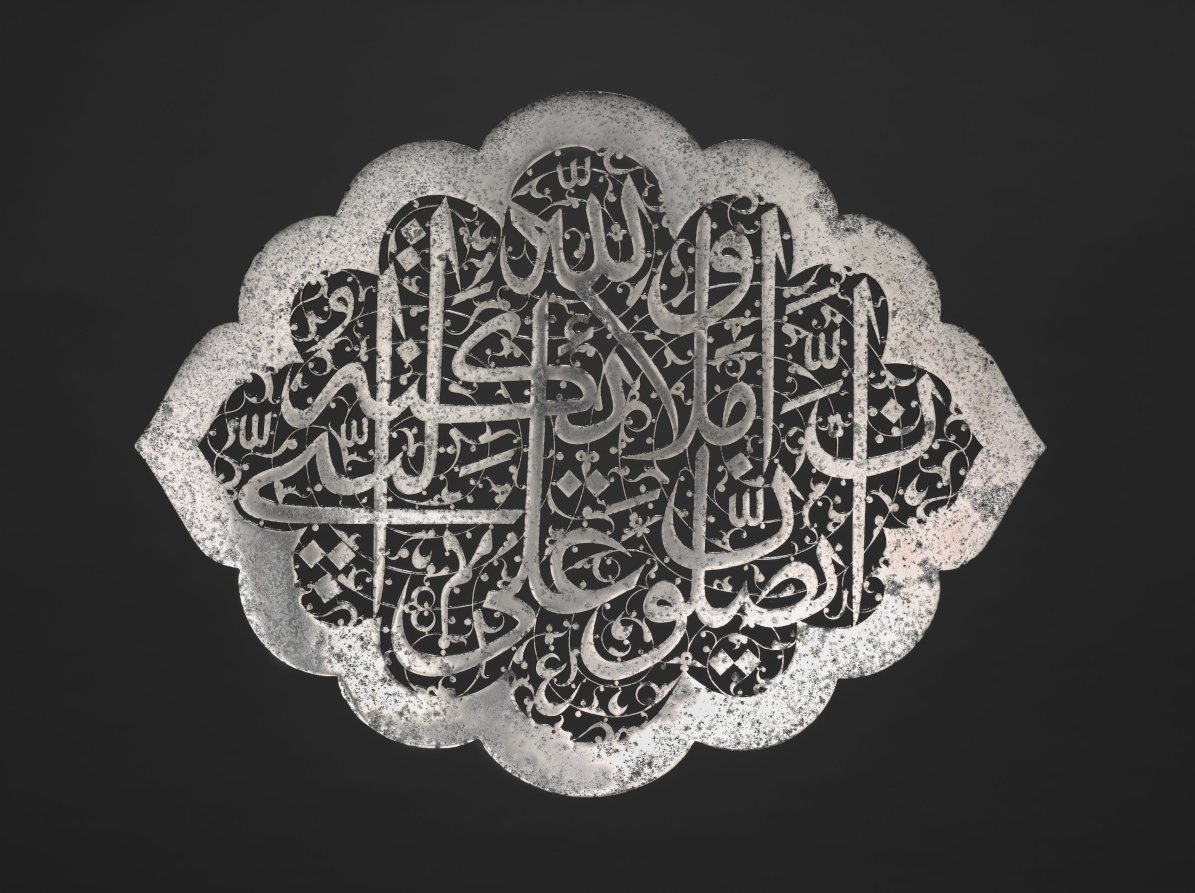
Inscription Plaque, Possibly from a Door (c. 1693) is in the Cleveland Museum of Art collection.
The work and its context
The museum's open-access catalogue describes the work:
This pierced steel plaque is said to have adorned the royal tomb of Shah Suleyman II (reigned 1666–93). The Qur’anic inscription reads: “Verily, God and His Angels send blessings on the Prophet” (33:56). Steel plaques of this type required great skill to manufacture. Because of the steel’s tensile strength and durability, artists were able to create elaborate openwork plaques like this one to decorate the doors of mausolea and mosques.
Object facts
- Title: Inscription Plaque, Possibly from a Door
- Date: c. 1693
- Culture: Iran, Safavid period (1501–1722)
- Type: Metalwork
- Technique: forged steel, cut to shape and pierced
- Dimensions: Overall: 27 x 35 cm (10 5/8 x 13 3/4 in.)
- Collection: Islamic Art
- Department: Islamic Art
- Accession number: 1994.1
A detail from the museum
Calligraphy was the supreme art form in the Islamic world.
Collection credit
Andrew R. and Martha Holden Jennings Fund
Further reading listed by the museum
- Cleveland Art : The Cleveland Museum of Art Members Magazine. Vol. 35 no. 05, May. Cleveland, Ohio: Cleveland Museum of Art, 1995.
View the collection record
See the museum's photographs and full catalogue entry. Catalogue text is reproduced from the Cleveland Museum of Art's open-access data, with HTML formatting removed. This object and its supplied image are designated CC0.
Sources
More in Lifestyle
Keep reading