Insect Bell Pendant (400–1100): Art, History and Details
Insect Bell Pendant at the Cleveland Museum of Art: 400–1100, gold, cast. Explore the work's context, creator attribution and collection history.
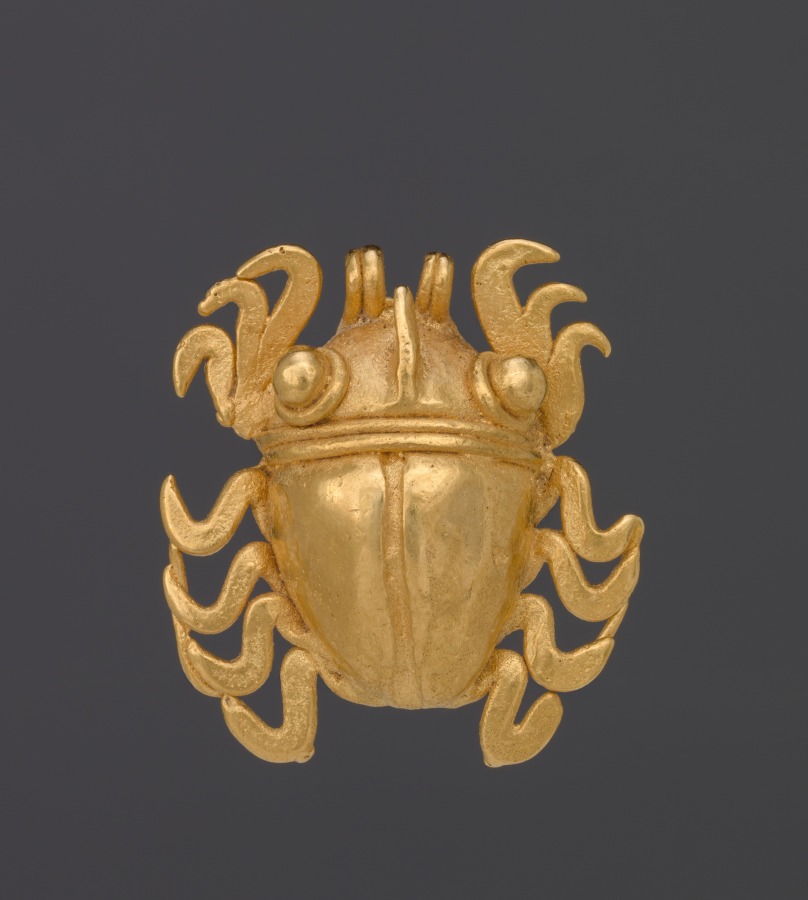
Insect Bell Pendant (400–1100) is in the Cleveland Museum of Art collection.
The work and its context
The museum's open-access catalogue describes the work:
Ring, ring! What do these four objects have in common? They are all bells! The turtle with ruby eyes (1966.473) and small gold insect (2015.12) were likely inspired by imaginary creatures. Fabergé (say: fab-er-zhay) probably modeled the turtle after small Japanese figurines called netsuke (say: nets-kay). The insect with 14 legs may combine features of marine animals and bugs. The wooden figure (1975.190) was used in healing rituals. Notice the patterns on the body of the bell. Similar shapes are found on other Kongo-style carvings and textiles. The bronze bell (1998.77.2) looks like a tall helmet topped by a pair of horns. It is decorated with a diamond that probably symbolized a southern Chinese tribe. Look closely at each bell’s shape and material. How might those details affect the sound it makes?
Object facts
- Title: Insect Bell Pendant
- Date: 400–1100
- Culture: Isthmian Region (Panama), Coclé, 5th century-12th century
- Type: Metalwork
- Technique: gold, cast
- Dimensions: Overall: 2.2 x 1.1 cm (7/8 x 7/16 in.)
- Collection: AA - Intermediate Region
- Department: Art of the Americas
- Accession number: 2015.12
A detail from the museum
The practice of crafting gold objects in Panama dates back nearly 2,000 years.
Collection credit
Severance and Greta Millikin Purchase Fund
View the collection record
See the museum's photographs and full catalogue entry. Catalogue text is reproduced from the Cleveland Museum of Art's open-access data, with HTML formatting removed. This object and its supplied image are designated CC0.
Sources
More in Lifestyle
Keep reading