Jar (1400–1600): Art, History and Details
Jar at the Cleveland Museum of Art: 1400–1600, Ceramic, slip. Explore the work's context, creator attribution and collection history.
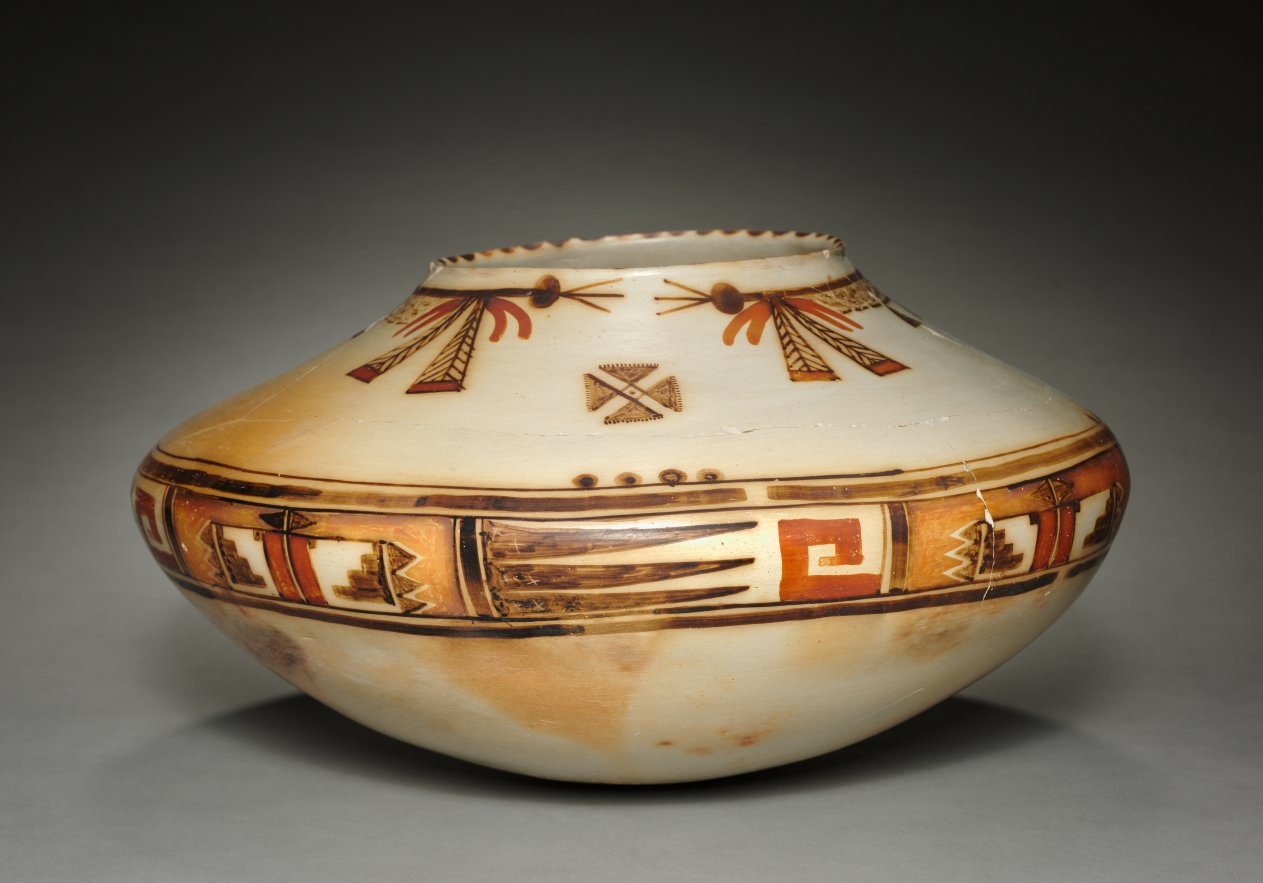
Jar (1400–1600) is in the Cleveland Museum of Art collection.
The work and its context
The museum's open-access catalogue describes the work:
Ancient Sikyatki ceramics are noted for their large, distinctive shapes, meticulously stone-polished surfaces, thin walls that “ring” when tapped, and wide variety of reds and oranges, a contrast to earlier preferences for black and white. These artistically and technically inventive vessels are ancestral to modern Hopi ceramics, having developed in the area where Hopi communities live today. The Hopi regard a mottled orange color as a sign that the pot emerged from firing with life and spirit; the vessel’s “voice” is a bell-like tone that tapping produces. Such concepts likely have roots in the ancient past.
Object facts
- Title: Jar
- Date: 1400–1600
- Culture: Native North America, Southwest, Ancestral Pueblo, Sikyatki style
- Type: Ceramic
- Technique: Ceramic, slip
- Dimensions: Overall: 21.2 x 38.8 cm (8 3/8 x 15 1/4 in.)
- Collection: AA - Native North America
- Department: Art of the Americas
- Accession number: 1990.10
Collection credit
Purchase from the J. H. Wade Fund
Further reading listed by the museum
- Young-Sánchez, Margaret. "Notable Acquisitions." The Bulletin of the Cleveland Museum of Art 78, no. 3 (1991): 63-147.
View the collection record
See the museum's photographs and full catalogue entry. Catalogue text is reproduced from the Cleveland Museum of Art's open-access data, with HTML formatting removed. This object and its supplied image are designated CC0.
Sources
More in Lifestyle
Keep reading