Jar (481–221 BCE): Art, History and Details
Jar at the Cleveland Museum of Art: 481–221 BCE, earthenware with stamped decoration. Explore the work's context, creator attribution and collection history.
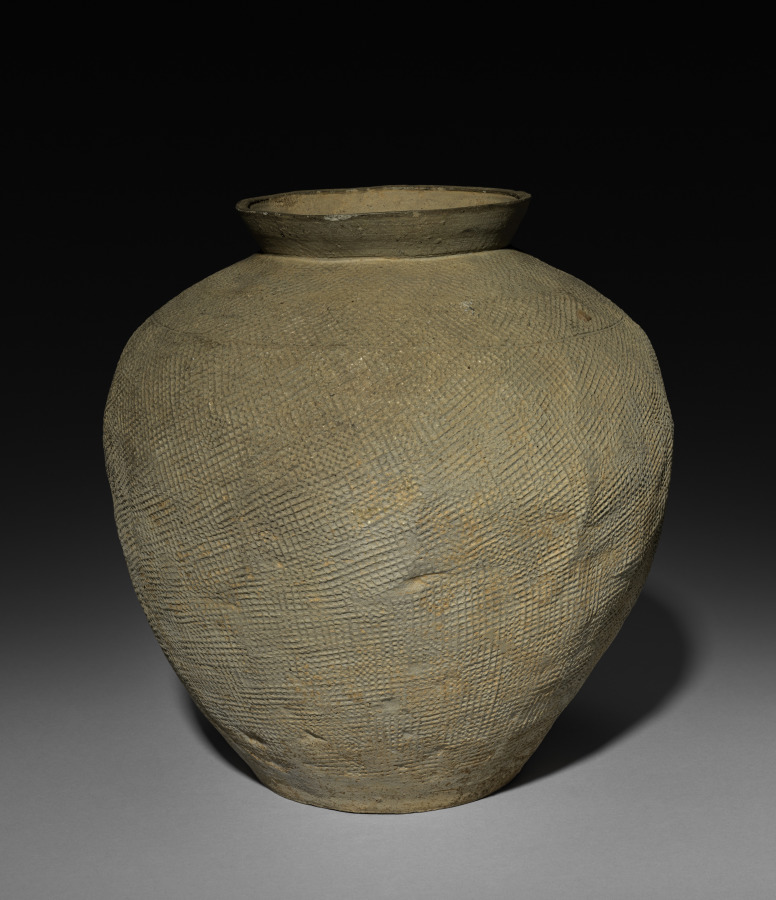
Jar (481–221 BCE) is in the Cleveland Museum of Art collection.
The work and its context
The museum's open-access catalogue describes the work:
Bronze Age potters customarily used patterned wooden paddles to smooth the ridges of their coil-built wares. Because such early pots were beaten repeatedly and randomly while still in the leather-hard state, the paddles did not leave isolated, self-contained patterns, but an overall surface texture.
Object facts
- Title: Jar
- Date: 481–221 BCE
- Culture: China, Hunan province, reportedly Changsha, Eastern Zhou dynasty (770–256 BCE), Warring States period (475–221 BCE)
- Type: Ceramic
- Technique: earthenware with stamped decoration
- Dimensions: Diameter of mouth: 12.8 cm (5 1/16 in.); Overall: 25.7 cm (10 1/8 in.)
- Collection: China - Zhou Dynasty
- Department: Chinese Art
- Accession number: 1938.195
Collection credit
Purchase from the J. H. Wade Fund
Further reading listed by the museum
- Shafer, Thomas. Pottery Decoration. New York: Watson-Guptill Publications, 1976.
- Wilson, J. Keith, and Anne E. Wardwell. "New Objects/New Insights: Cleveland's Recent Chinese Acquisitions." The Bulletin of the Cleveland Museum of Art 81, no. 8 (October 1994): 270–347.
View the collection record
See the museum's photographs and full catalogue entry. Catalogue text is reproduced from the Cleveland Museum of Art's open-access data, with HTML formatting removed. This object and its supplied image are designated CC0.
Sources
More in Lifestyle
Keep reading