Jar (c. 100 BCE–100 CE): Art, History and Details
Jar at the Cleveland Museum of Art: c. 100 BCE–100 CE, burnished earthenware. Explore the work's context, creator attribution and collection history.
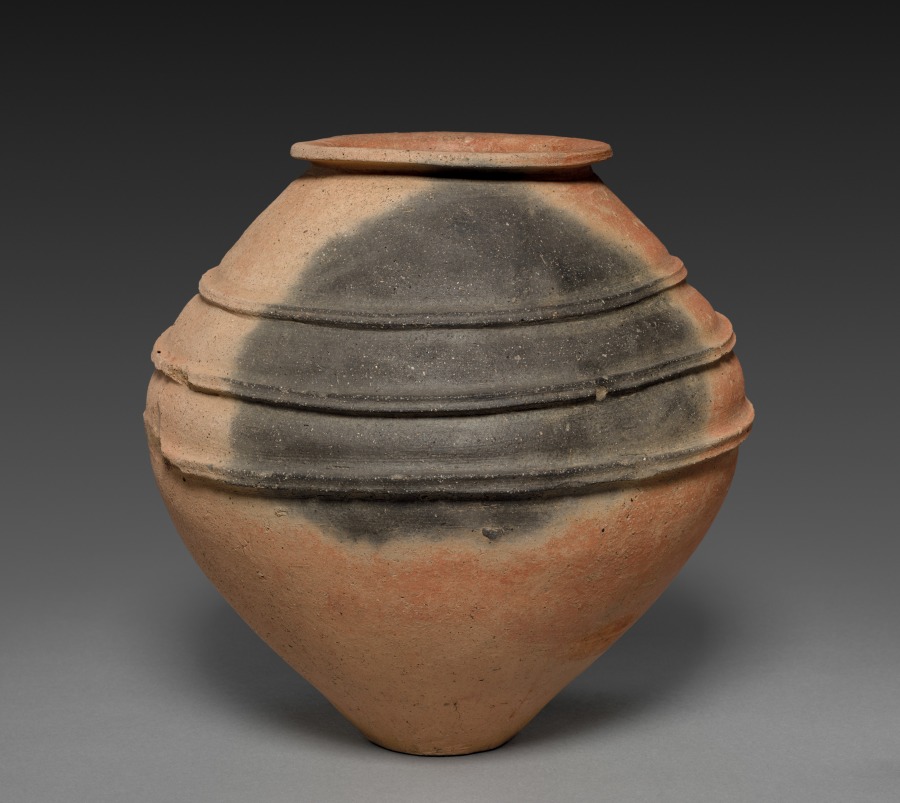
Jar (c. 100 BCE–100 CE) is in the Cleveland Museum of Art collection.
The work and its context
The museum's open-access catalogue describes the work:
The banding around this jar’s upper portion is an unusual feature for Yayoi pottery, which usually has a flat surface. It was likely made in western Japan, between Seto in Aichi prefecture and Kyushu, the southernmost main island. It is not believed to be a cooking vessel, but may have been used for storage. The ash spots occurred naturally during firing.
Object facts
- Title: Jar
- Date: c. 100 BCE–100 CE
- Culture: Japan, Yayoi period (c. 300 BCE–300 CE)
- Type: Ceramic
- Technique: burnished earthenware
- Dimensions: Diameter: 29.8 cm (11 3/4 in.); Overall: 19 cm (7 1/2 in.)
- Collection: Japanese Art
- Department: Japanese Art
- Accession number: 1984.26
Collection credit
Purchase from the J. H. Wade Fund
Further reading listed by the museum
- Turner, Evan H. “The Year in Review for 1984.” The Bulletin of the Cleveland Museum of Art 72, no. 2 (April 1985): 163–207.
- Cunningham, Michael R., "Asian Autumn", Cleveland Museum of Art. Cleveland Art: The Cleveland Museum of Art Members Magazine. Vol. 35 no. 08, October 1995
View the collection record
See the museum's photographs and full catalogue entry. Catalogue text is reproduced from the Cleveland Museum of Art's open-access data, with HTML formatting removed. This object and its supplied image are designated CC0.
Sources
More in Lifestyle
Keep reading