Kali (900s–1000s): Art, History and Details
Kali at the Cleveland Museum of Art: 900s–1000s, bronze. Explore the work's context, creator attribution and collection history.
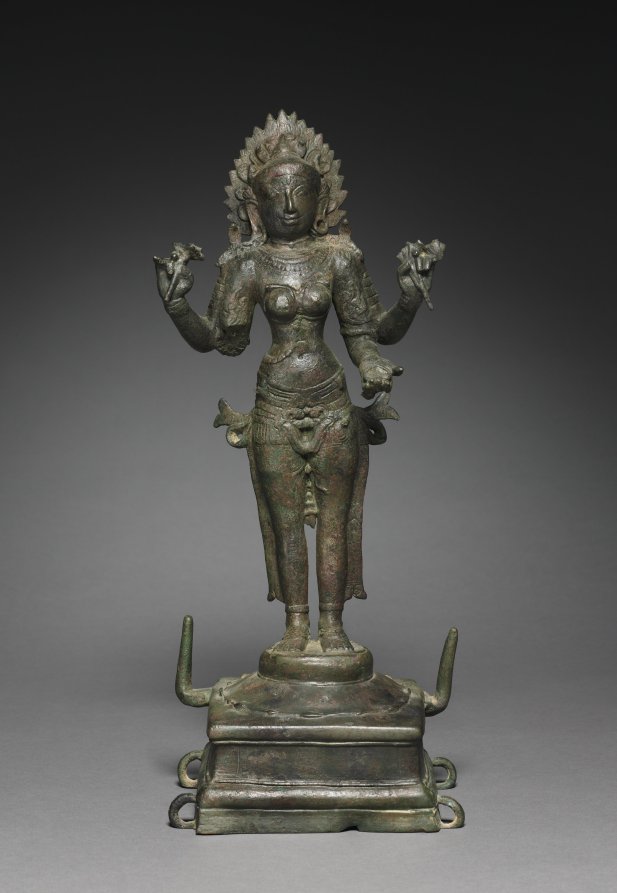
Kali (900s–1000s) is in the Cleveland Museum of Art collection.
The work and its context
The museum's open-access catalogue describes the work:
The female aspect of Shiva, the goddess Parvati, has her own cycle of myths, and she herself emanates into different forms. Some branches of Hinduism consider the goddess to be the supreme creator divinity herself, who generated all the other gods, including Shiva. This bronze sculpture could have been affiliated with either branch. Kali is the wrathful form of the goddess generated in the midst of a battle with a demon that the gods failed to conquer. Kali was to drink his blood before any drop fell to ground, or else a new demon would instantly be generated. The demons are metaphors for human vices, such as egotistic pride and arrogance.
Object facts
- Title: Kali
- Date: 900s–1000s
- Culture: South India, Tamil Nadu, Chola period (900-13th century)
- Type: Sculpture
- Technique: bronze
- Dimensions: Overall: 46.7 x 20.4 x 15.4 cm (18 3/8 x 8 1/16 x 6 1/16 in.); Base: 11.4 x 15.2 cm (4 1/2 x 6 in.)
- Collection: Indian Art
- Department: Indian and Southeast Asian Art
- Accession number: 1956.7
Collection credit
The Norweb Collection
View the collection record
See the museum's photographs and full catalogue entry. Catalogue text is reproduced from the Cleveland Museum of Art's open-access data, with HTML formatting removed. This object and its supplied image are designated CC0.
Sources
More in Lifestyle
Keep reading