Karnak, Les Pylônes d'Horus (1860s): Art, History and Details
Karnak, Les Pylônes d'Horus at the Cleveland Museum of Art: 1860s, Albumen print from wet collodion negative. Explore the work's context, creator attribution and collection history.
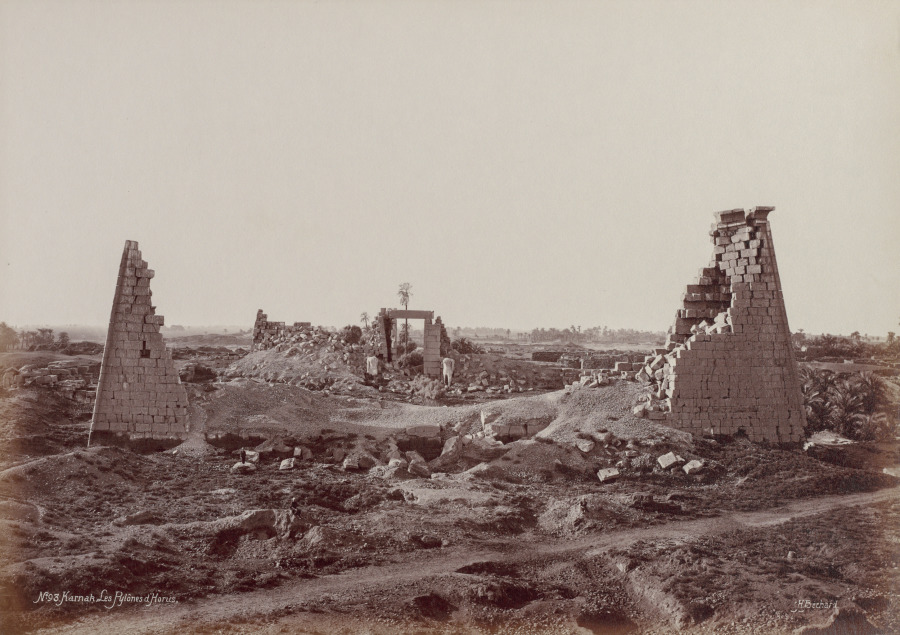
Karnak, Les Pylônes d'Horus (1860s) is in the Cleveland Museum of Art collection. The museum's creator attribution is Henri Béchard (French).
The work and its context
The museum's open-access catalogue describes the work:
This desolate view of the remnants of the monumental gateway flanked by figures of the god Horus, usually depicted as a falcon-headed man, emphasizes the sense of discovery that must have been felt by tourists visiting Egypt in the 1860s. A tiny figure at the lower right testifies to the monumental scale of the ruins.
Object facts
- Title: Karnak, Les Pylônes d'Horus
- Date: 1860s
- Creator attribution: Henri Béchard (French)
- Culture: France
- Type: Photograph
- Technique: Albumen print from wet collodion negative
- Dimensions: Image: 26 x 37.2 cm (10 1/4 x 14 5/8 in.)
- Collection: Photography
- Department: Photography
- Accession number: 2018.252
A detail from the museum
Karnak is the second most visited tourist site in Egypt after the pyramids of Giza.
Collection credit
Gift of Tom E. Hinson and Diana S. Tittle
View the collection record
See the museum's photographs and full catalogue entry. Catalogue text is reproduced from the Cleveland Museum of Art's open-access data, with HTML formatting removed. This object and its supplied image are designated CC0.
Sources
More in Lifestyle
Keep reading


