Kennet (c 1920): Art, History and Details
Kennet at the Cleveland Museum of Art: c 1920, plain weave cotton, printed. Explore the work's context, creator attribution and collection history.
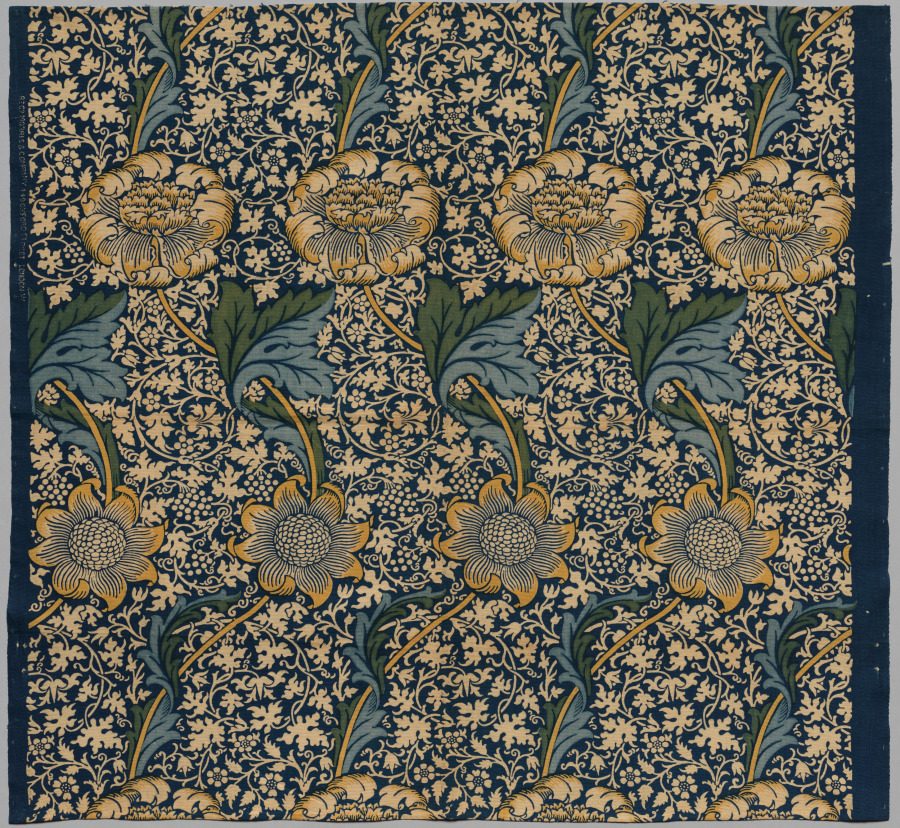
Kennet (c 1920) is in the Cleveland Museum of Art collection. The museum's creator attribution is William Morris (British, 1834–1896).
The work and its context
The museum's open-access catalogue describes the work:
Morris said that he used the South Kensington Museum (now the Victoria & Albert Museum) more than anyone alive. As one of the most knowledgeable textile historians of his day, Morris filtered his love of nature through the lens of history. Later textiles with strong diagonal orientation, such as Kennet, show a debt to the centuries-old Italian cut velvet that he had studied. Named after a river in the south of England that flows into the Thames, Kennet is an example of one of his patterns that could be purchased in a variety of colors and fabrics, including cotton, velveteen, silk, and Madras muslin, creating limitless possibilities to appeal to consumers’ needs and tastes.
Object facts
- Title: Kennet
- Date: c 1920
- Creator attribution: William Morris (British, 1834–1896)
- Culture: England, Merton Abbey, 20th century
- Type: Textile
- Technique: plain weave cotton, printed
- Dimensions: Overall: 90.2 x 97.8 cm (35 1/2 x 38 1/2 in.)
- Collection: Textiles
- Department: Textiles
- Accession number: 1937.698
Collection credit
Gift of Mrs. Henry Chisholm
Further reading listed by the museum
- Parry, Linda. William Morris Textiles. London: Weidenfeld and Nicolson, 1983.
- Korkow, Cory. "Textiles." IN William Morris: Designing an Earthly Paradise. Cory Korkow and Victoria Hepburn, 8-23. Cleveland, Ohio : Cleveland Museum of Art, 2017 .
View the collection record
See the museum's photographs and full catalogue entry. Catalogue text is reproduced from the Cleveland Museum of Art's open-access data, with HTML formatting removed. This object and its supplied image are designated CC0.
Sources
More in Lifestyle
Keep reading