Kero (Waisted Cup) (after 1550): Art, History and Details
Kero (Waisted Cup) at the Cleveland Museum of Art: after 1550, wood, inlaid pigments. Explore the work's context, creator attribution and collection history.
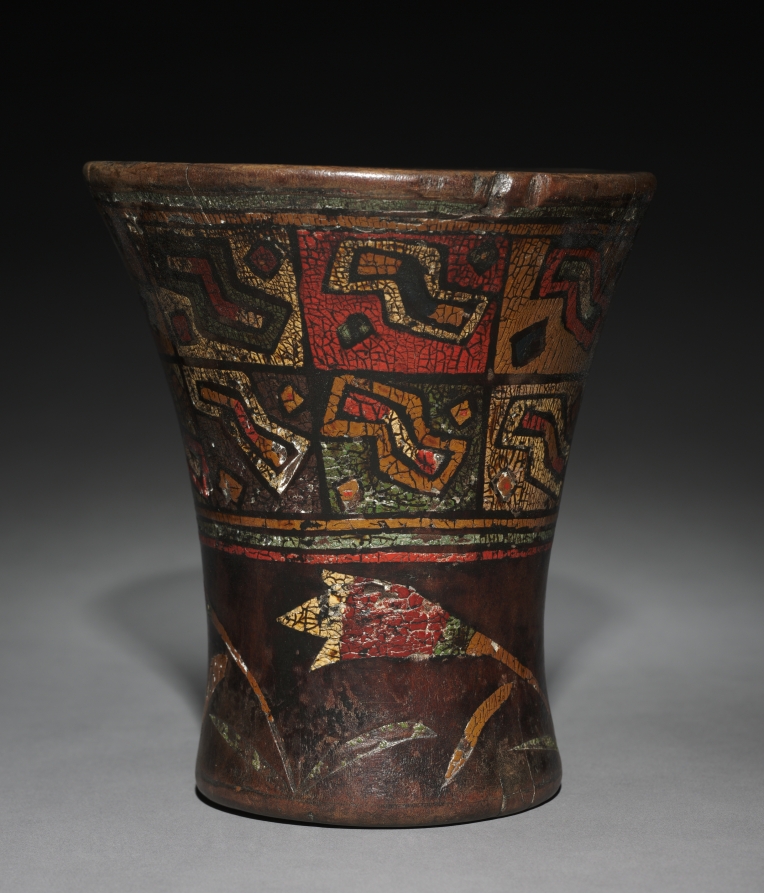
Kero (Waisted Cup) (after 1550) is in the Cleveland Museum of Art collection.
The work and its context
The museum's open-access catalogue describes the work:
Keros, used to drink the maize beer chicha, were essential items of Inka statecraft. Made and used in pairs, they reflect the important Andean concept of reciprocity. Native use of keros continued in the colonial period, the date of these two examples, which come from separate pairs. The example with geometric motifs is closest to pre-conquest models. On the second, two armies converge: the Inka, dressed in tunics with waistbands, and their opponents, perhaps jungle people whose body parts are heaped in a centerpiece.
Object facts
- Title: Kero (Waisted Cup)
- Date: after 1550
- Culture: Peru, Colonial Inka style, 16th century
- Type: Wood
- Technique: wood, inlaid pigments
- Dimensions: Diameter of mouth: 17.8 x 16 cm (7 x 6 5/16 in.); Overall: 17.8 cm (7 in.)
- Collection: AA - Andes
- Department: Art of the Americas
- Accession number: 1957.143
Collection credit
Gift of William R. Carlisle
View the collection record
See the museum's photographs and full catalogue entry. Catalogue text is reproduced from the Cleveland Museum of Art's open-access data, with HTML formatting removed. This object and its supplied image are designated CC0.
Sources
More in Lifestyle
Keep reading