Khadgaroma, Son of Ravana (c. 1720): Art, History and Details
Khadgaroma, Son of Ravana at the Cleveland Museum of Art: c. 1720, Gum tempera, ink, and hand-colored silver paper appliqué on paper. Explore the work's context, creator attribution and collection history.
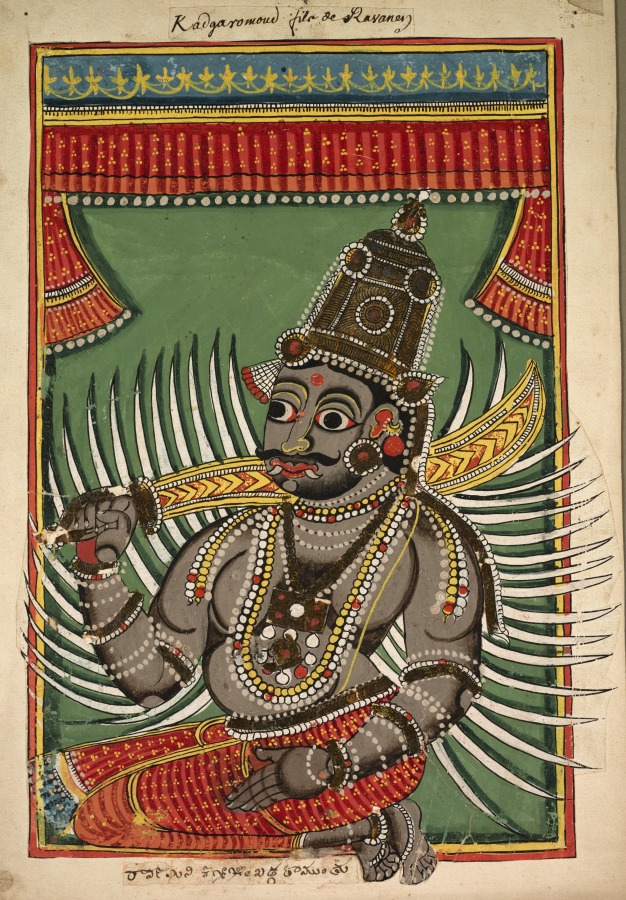
Khadgaroma, Son of Ravana (c. 1720) is in the Cleveland Museum of Art collection.
The work and its context
The museum's open-access catalogue describes the work:
Blades fan around the figure of this demon, illustrating the meaning of his name: he whose “body hair is swords.” To further emphasize his favorite weapon, he clutches a broad curving sword in his right hand. The inscription at the bottom identifies him by name in the local language of Telugu, but a section has been pasted upside down, indicating that the owner of this page did not read the script. The inscription has been translated into French at the top. Territories in southern India were under French colonial control from 1692 to 1761.
Object facts
- Title: Khadgaroma, Son of Ravana
- Date: c. 1720
- Culture: Southern India, Andhra Pradesh
- Type: Painting
- Technique: Gum tempera, ink, and hand-colored silver paper appliqué on paper
- Dimensions: Overall: 39.7 x 27.6 cm (15 5/8 x 10 7/8 in.)
- Collection: Indian Art
- Department: Indian and Southeast Asian Art
- Accession number: 2001.163
A detail from the museum
The silver appliqué, which was likely mixed with the yellow pigment gamboge, imitates gold.
Collection credit
Gift of William E. Ward in memory of his wife, Evelyn Svec Ward
View the collection record
See the museum's photographs and full catalogue entry. Catalogue text is reproduced from the Cleveland Museum of Art's open-access data, with HTML formatting removed. This object and its supplied image are designated CC0.
Sources
More in Lifestyle
Keep reading