Kom Ombo (c. 1858): Art, History and Details
Kom Ombo at the Cleveland Museum of Art: c. 1858, albumen print from wet collodion negative. Explore the work's context, creator attribution and collection history.
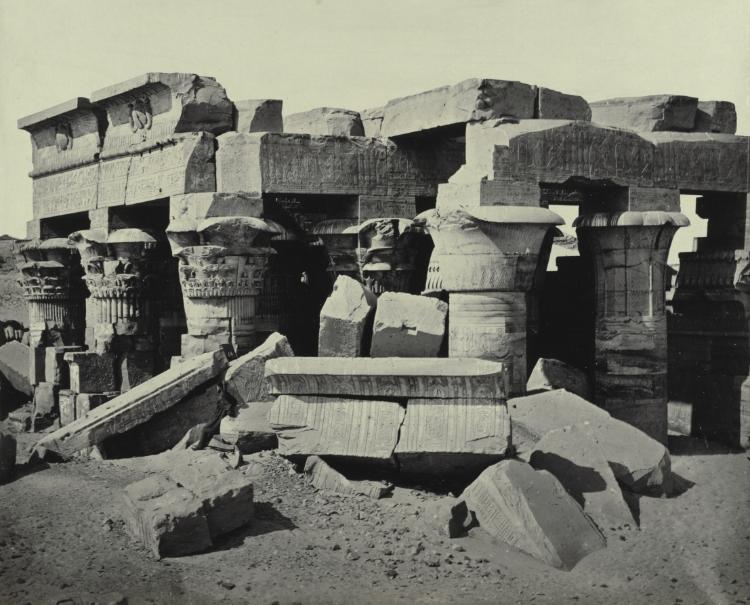
Kom Ombo (c. 1858) is in the Cleveland Museum of Art collection. The museum's creator attribution is Francis Frith (British, 1822–1898); William Mackenzie.
The work and its context
The museum's open-access catalogue describes the work:
Frith often emulated the drawings of David Roberts in selecting monuments to illustrate and positions from which to shoot. Both artists encountered the temple at Kom Ombo still more than halfway buried in sand. “It reminds you of some grand old giant, buried to the shoulders,” wrote Frith, “not dead yet, but overpowered and imprisoned by some potent spell—majestic in his helplessness.” In his photographs, however, Frith cared less about emotional impact and more about the accuracy of his depictions. “A truthful record is of more value than the most elaborately beautiful picture,” he proclaimed.
Object facts
- Title: Kom Ombo
- Date: c. 1858
- Creator attribution: Francis Frith (British, 1822–1898); William Mackenzie
- Culture: England, 19th century
- Type: Photograph
- Technique: albumen print from wet collodion negative
- Dimensions: Image: 39.5 x 49 cm (15 9/16 x 19 5/16 in.); Matted: 61 x 76.2 cm (24 x 30 in.)
- Collection: Photography
- Department: Photography
- Accession number: 1986.193
Collection credit
John L. Severance Fund
Further reading listed by the museum
- Turner, Evan H. "The Year in Review for 1986." The Bulletin of the Cleveland Museum of Art 74, no. 2 (1987): 38-79.
- Cleveland Museum of Art, Tom E Hinson. Catalogue of Photography. Cleveland, OH: Cleveland Museum of Art, 1996.
View the collection record
See the museum's photographs and full catalogue entry. Catalogue text is reproduced from the Cleveland Museum of Art's open-access data, with HTML formatting removed. This object and its supplied image are designated CC0.
Sources
More in Lifestyle
Keep reading